

Sep 1, 2026 | | This post is also available in: Arabic
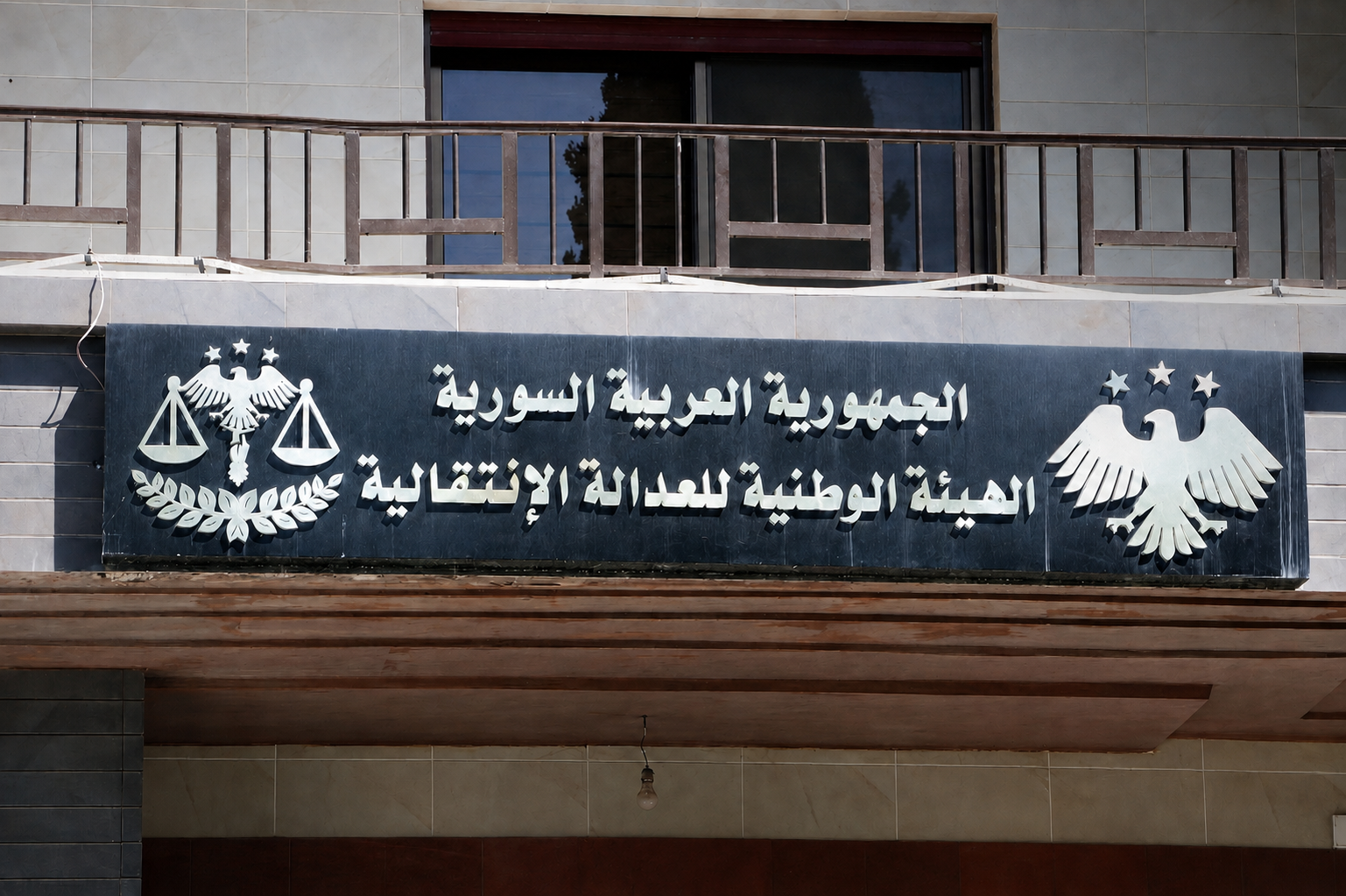
The establishment of a victims fund should be central to Syria’s transitional justice process. The National Commission for Transitional Justice’s (NCTJ) efforts to create one deserve support, grounded in a clear principle: victims are rights-holders entitled to remedy and reparation, not merely beneficiaries of assistance. With meaningful victim participation, transparent governance and sustainable funding, the fund could address urgent needs while laying the foundations for a comprehensive national reparations programme.
The scale of violations makes this mechanism necessary. Hundreds of thousands of civilians have been killed and forcibly disappeared, and millions displaced. Survivors and families continue to face physical, psychological, legal and economic consequences. Former detainees need medical care; families of the disappeared need support while seeking answers; displaced people lack civil or property documents. Widowed women and other vulnerable groups face additional barriers to housing, livelihoods and services. These harms continue to shape victims’ lives and participation in Syria’s transition.
More Than Assistance
A victims fund must be distinguished from humanitarian assistance, which responds to vulnerability and immediate need. Reparative measures recognise that people have suffered violations and are entitled to remedy. Transitional justice extends beyond criminal trials: reparation may include restitution, compensation, rehabilitation, satisfaction and guarantees of non-recurrence. A fund can contribute to several forms, although it cannot deliver all of them independently.
Initially, the fund should prioritise collective and interim measures without waiting for every individual claim to be investigated. These could include healthcare, legal assistance, education, livelihood support and services for families of the missing and disappeared. Programmes should address harms resulting from violations, rather than replace general welfare or humanitarian aid. Particular attention should reach the most vulnerable, while eligibility should encompass victims of serious human rights violations and international crimes committed by all perpetrators, wherever victims currently live.
This approach requires clarity about what the fund can achieve. Interim support should address continuing harm without displacing the broader obligation to provide comprehensive reparations. Medical and psychological services, assistance with documentation and support for affected families can make an immediate difference, but cannot alone restore property, establish the truth about disappearances or guarantee that violations will not recur. The fund should therefore operate as part of a wider transitional justice framework, connecting practical support with recognition of victims’ rights and longer-term measures to restore them.
Victims must help determine how the fund operates, not simply be consulted after key decisions. Victims’ associations and Syrian civil society organisations should have formal advisory and monitoring roles, including setting priorities, assessing programmes and reviewing results. Priorities should evolve with resources, access and needs. Public reporting, independent oversight and transparent selection of implementing organisations will be essential safeguards against political interference, favouritism and diversion.
Where Will the Funding Come From?
Funding should draw on domestic and international resources. Significant sums have been collected abroad through fines, penalties and forfeitures arising from sanctions violations, export-control offences and criminal cases connected to Syria. Further resources may be recovered from businesspeople who supported, enabled or profited from the Assad regime’s war effort and associated violations. Where competent authorities establish through lawful proceedings that assets derive from corruption, unlawful enrichment or other illegal conduct, they should be confiscated and considered for redirection to victims.
Yet proceeds linked to Syria generally remain in foreign treasuries, while recovered domestic assets risk entering the general budget or other state institutions. Foreign states and Syrian authorities should establish legal and policy frameworks ensuring an appropriate share supports victims directly.
Rifaat al-Assad’s assets illustrate this opportunity. French courts ordered the confiscation of a property portfolio valued at approximately €90 million; his wider holdings across France, Spain and the UK were estimated at several hundred million euros. In July 2026, France and Syria agreed to begin returning €51 million from assets confiscated by French authorities through cooperation and development activities benefiting Syrians. This is welcome, but recovered funds should support the victims fund through a transparent, victim-centred reparative process.
Other sources could include sanctions-evasion proceeds, interest on frozen assets where legally available, and voluntary donor contributions. The Lafarge cases illustrate another avenue. In April 2026, a French court convicted the cement company of financing terrorism and violating international sanctions, imposing a €1.125 million corporate fine. The company and several defendants were also ordered to pay a joint customs penalty of approximately €4.57 million. Separately, Lafarge pleaded guilty in the United States in 2022 to providing material support to designated terrorist organisations, agreeing to pay $777.78 million in criminal fines and forfeiture. Although these proceedings were not Syrian reparations mechanisms, such proceeds should be considered for lawful redirection to victims, subject to domestic law, judicial orders and existing claimants’ rights.
Domestically, assets lawfully confiscated from businesspeople who accumulated illicit wealth should support victims rather than be transferred solely to the sovereign fund. This could include assets associated with Muhammad Hamsho, Samer Foz, Rami Makhlouf and Hussam Katerji, where competent authorities establish their unlawful origins. Transfers require lawful confiscation, judicial review and due process. Frozen state or private assets cannot simply be taken without legal authority, and money already awarded to particular victims must not be redirected. Respect for property rights and procedural guarantees must underpin the fund.
The NCTJ should lead national reparations policy, supported by international cooperation to secure resources abroad. A complementary international mechanism could receive Syria-linked proceeds from participating states and channel them into programmes developed with the Commission, victims’ groups and Syrian civil society. The European Union, United Nations or an agreement among supportive states could provide an institutional route. Existing Syrian organisations and international accountability bodies could contribute documentation and expertise.
A properly designed fund would connect accountability with tangible improvements in victims’ lives. Criminal cases, sanctions enforcement and asset recovery should not generate revenue for governments while leaving those harmed without remedy. Redirecting Syria-linked proceeds to victims would affirm that accountability serves not only punishment, but also the restoration of rights, mitigation of continuing harm and prevention of recurrence. Supporting the NCTJ’s efforts is therefore an essential step towards making transitional justice meaningful to the people in whose name it is being built.
Written by: Eyad Hamid, Head of Human Rights & Business Unit, SLDP