Oct 15, 2026    | |   This post is also available in: Arabic

A Damascus tram, circa 1910. The city’s tramway, eventually operated by a Belgian company, became a target of the 1931 “electric boycott,” when Syrians refused to ride the trams or buy electricity in protest against French Mandate rule. Photo via Wikimedia Commons.

A Damascus tram, circa 1910. The city’s tramway, eventually operated by a Belgian company, became a target of the 1931 “electric boycott,” when Syrians refused to ride the trams or buy electricity in protest against French Mandate rule. Photo via Wikimedia Commons.

Boycotts are by no means new to Syria. In fact, organized boycotts were instrumental forms of nonviolent resistance to French colonial rule. After the Great Syrian Revolt of 1925-1927 was defeated by French forces, Syrians sought new, nonviolent tools to communicate their political desires. Levying their positions as consumers, Syrians organized and mobilized strikes and boycotts. One notable example is the “electric boycotts” of 1931 where Syrians refused to purchase electricity or use tramways controlled by Belgian companies. Through organized local committees and coordinated boycotts, Syrians were able to get the French Mandate to concede to their demands.

Boycotts in Syria today

Today, the anti-Assad boycott offers a meaningful opportunity to continue that tradition.
Among the most visible anti-Assad boycotts is the campaign against Mohammad Hamsho, spearheaded and popularized on social media by filmmaker and activist Hassan Akkad. In response to Hamsho’s material support to the former regime and his profiteering, activists called for a boycott of companies attributed to him, from Sinalco soft drinks to the Yaafour hotel. At its core, the campaign carries a clear message: Syrians should not support regime-era businessmen who enabled the oppression of, and violations against, the Syrian people.

Yet, the problem is bigger than Hamsho. The regime’s reach extended well beyond the war machine and into seemingly innocent enterprises. Examples include the Bustan Foundation, a “charity” financed by Rami Makhlouf; Damaskino Mall, owned by Bilal al-Naal, who helped regime officials evade sanctions; and tourism ventures like Khan Wahoud of Mohammad Ali Wahoud, another businessman with connections to Assad-era influential figures.

Why it matters

The anti-Assad boycott offers Syrians more than a means of registering disapproval.

First, boycotts can foster social solidarity and unity, including across class lines. In Syria, such campaigns have historically carried a class dimension. In 1930s Syria, grid electricity was a paid privilege enjoyed by relatively few households, asking people to stop using it meant asking the better-off to make a visible sacrifice for the shared cause. Alongside market strikes and street protests, these boycotts helped present the community as standing together across economic divides. Today’s campaign holds the potential to build similar bridges. Syrians with more leeway in their spending can choose to be more intentional in who they support. Those who visit malls like Damskino and khans like Khan Wahoud can opt out and seek non-Assad-affiliated enterprises to support instead. Syrian investors can choose to disengage from projects that have Assad tycoon involvement, pushing for reconstruction untethered from previous networks of abuse. The idea of forgoing one’s own material whims for the promotion of greater social good is a cornerstone of class solidarity.

Second, boycotts can communicate consumers’ preferences and priorities to authorities eager to maximize economic stability and prosperity. Those authorities may take note of where consumers spend. Timing matters here: signaling at the genesis of Syria’s new economy, before entities and individuals become entrenched, has potential for a sustainable impact through norm-setting. Boycotts can make clear to the authorities and businessmen that Syrians will not accept to support those who profit from their suffering.

Third, boycotts promote democratic participatory norms, agency, and self-determination. For a public long shut out of political decision-making, a boycott is a low-barrier way to take part; anyone buying bread or a phone plan can join in. In doing so, consumers build the habit of weighing the public consequences of private choices and of acting together to hold powerful actors to account. This collectivist activism will also build grassroots organizing capacity. Researching ownership, verifying claims, and spreading the word draw individuals into shared work for a common purpose. Bottom-up organizing is a driver of democratic participation.

Limitations on Boycotts

Boycotts are not without their limitations, however. The first is illusory choice, where entire sectors are occupied by unfavorable actors. Syrian telecoms during Assad’s rule are a prime example. SyriaTel and MTN were the only options available to Syrian users, and both companies were deeply entrenched in the Assad regime, with their revenues funneled into an economy that financed repression. Ownership and control of these entities is now shifting, with Syria’s sovereign wealth fund emerging as the dominant force in managing SyriaTel, among other entities. For a boycott to work, ownership of the field needs to be diverse. Where beneficiaries are concentrated in the same entities, as was the case between SyriaTel and MTN, a boycott of either company will not matter.

The second limitation is opacity. Informed consumption, and therefore any effective boycott, depends on knowing who owns what, yet Syria has no open, searchable company registry. Recent reforms have not closed this gap. Although the Ministry of Economy and Industry launched an online company registration platform on July 7, 2026, the platform is built for incorporation rather than public search. Company bylaws published in the Official Gazette do offer more information, however accessing the Gazette can prove to be a roadblock to popular mobilization.

This underscores why the government should establish a public beneficial ownership registry, preferably grounded in legislation. Such a registry would offer the constancy and reliability that civil society efforts cannot guarantee, allowing everyday Syrians not only to independently evaluate whom they wish to support, but also to understand who the major players in their country’s economy are. It would also demonstrate that the government is eager to facilitate access to the information consumers need to make informed choices.

Shopping as a political act

A consumer’s purchasing power is one of the most powerful nonviolent tools for upholding ethical priorities. Choosing where to shop is a fundamental exercise of political agency; just as businesses must perform human rights due diligence, consumers must align their capital with their convictions. Boycotts, therefore, are a profound expression of democracy and political will — a weapon wielded by all, and an exceptionally powerful weapon of the weak.

Written by: Sumaya Daghestani, BHR Legal Fellow, Human Rights and Business Unit, Syrian Legal Development Programme.

Levy Your Lira

Oct 15, 2026    | |   This post is also available in: Arabic
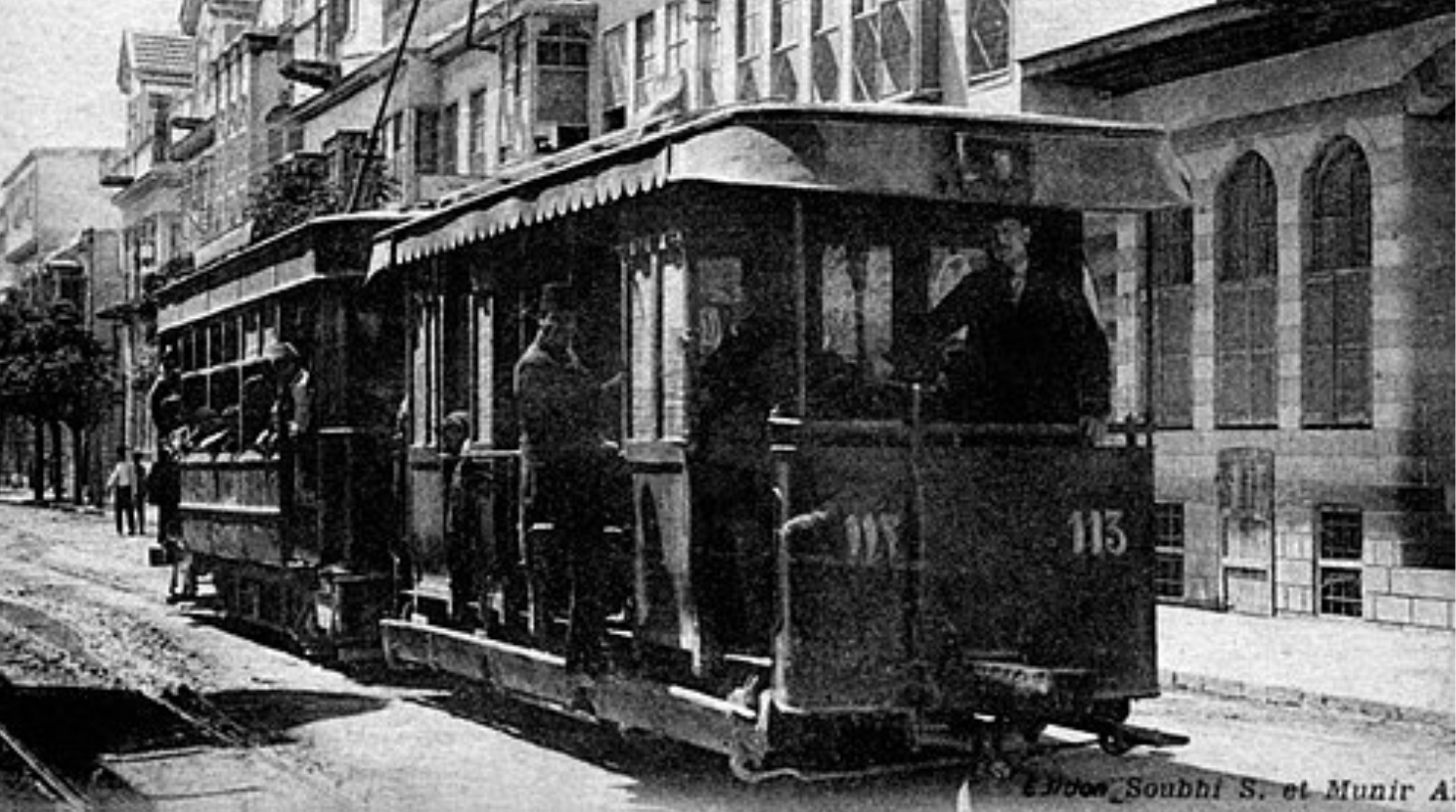
A Damascus tram, circa 1910. The city’s tramway, eventually operated by a Belgian company, became a target of the 1931 “electric boycott,” when Syrians refused to ride the trams or buy electricity in protest against French Mandate rule. Photo via Wikimedia Commons.

A Damascus tram, circa 1910. The city’s tramway, eventually operated by a Belgian company, became a target of the 1931 “electric boycott,” when Syrians refused to ride the trams or buy electricity in protest against French Mandate rule. Photo via Wikimedia Commons.

Boycotts are by no means new to Syria. In fact, organized boycotts were instrumental forms of nonviolent resistance to French colonial rule. After the Great Syrian Revolt of 1925-1927 was defeated by French forces, Syrians sought new, nonviolent tools to communicate their political desires. Levying their positions as consumers, Syrians organized and mobilized strikes and boycotts. One notable example is the “electric boycotts” of 1931 where Syrians refused to purchase electricity or use tramways controlled by Belgian companies. Through organized local committees and coordinated boycotts, Syrians were able to get the French Mandate to concede to their demands.

Boycotts in Syria today

Today, the anti-Assad boycott offers a meaningful opportunity to continue that tradition.
Among the most visible anti-Assad boycotts is the campaign against Mohammad Hamsho, spearheaded and popularized on social media by filmmaker and activist Hassan Akkad. In response to Hamsho’s material support to the former regime and his profiteering, activists called for a boycott of companies attributed to him, from Sinalco soft drinks to the Yaafour hotel. At its core, the campaign carries a clear message: Syrians should not support regime-era businessmen who enabled the oppression of, and violations against, the Syrian people.

Yet, the problem is bigger than Hamsho. The regime’s reach extended well beyond the war machine and into seemingly innocent enterprises. Examples include the Bustan Foundation, a “charity” financed by Rami Makhlouf; Damaskino Mall, owned by Bilal al-Naal, who helped regime officials evade sanctions; and tourism ventures like Khan Wahoud of Mohammad Ali Wahoud, another businessman with connections to Assad-era influential figures.

Why it matters

The anti-Assad boycott offers Syrians more than a means of registering disapproval.

First, boycotts can foster social solidarity and unity, including across class lines. In Syria, such campaigns have historically carried a class dimension. In 1930s Syria, grid electricity was a paid privilege enjoyed by relatively few households, asking people to stop using it meant asking the better-off to make a visible sacrifice for the shared cause. Alongside market strikes and street protests, these boycotts helped present the community as standing together across economic divides. Today’s campaign holds the potential to build similar bridges. Syrians with more leeway in their spending can choose to be more intentional in who they support. Those who visit malls like Damskino and khans like Khan Wahoud can opt out and seek non-Assad-affiliated enterprises to support instead. Syrian investors can choose to disengage from projects that have Assad tycoon involvement, pushing for reconstruction untethered from previous networks of abuse. The idea of forgoing one’s own material whims for the promotion of greater social good is a cornerstone of class solidarity.

Second, boycotts can communicate consumers’ preferences and priorities to authorities eager to maximize economic stability and prosperity. Those authorities may take note of where consumers spend. Timing matters here: signaling at the genesis of Syria’s new economy, before entities and individuals become entrenched, has potential for a sustainable impact through norm-setting. Boycotts can make clear to the authorities and businessmen that Syrians will not accept to support those who profit from their suffering.

Third, boycotts promote democratic participatory norms, agency, and self-determination. For a public long shut out of political decision-making, a boycott is a low-barrier way to take part; anyone buying bread or a phone plan can join in. In doing so, consumers build the habit of weighing the public consequences of private choices and of acting together to hold powerful actors to account. This collectivist activism will also build grassroots organizing capacity. Researching ownership, verifying claims, and spreading the word draw individuals into shared work for a common purpose. Bottom-up organizing is a driver of democratic participation.

Limitations on Boycotts

Boycotts are not without their limitations, however. The first is illusory choice, where entire sectors are occupied by unfavorable actors. Syrian telecoms during Assad’s rule are a prime example. SyriaTel and MTN were the only options available to Syrian users, and both companies were deeply entrenched in the Assad regime, with their revenues funneled into an economy that financed repression. Ownership and control of these entities is now shifting, with Syria’s sovereign wealth fund emerging as the dominant force in managing SyriaTel, among other entities. For a boycott to work, ownership of the field needs to be diverse. Where beneficiaries are concentrated in the same entities, as was the case between SyriaTel and MTN, a boycott of either company will not matter.

The second limitation is opacity. Informed consumption, and therefore any effective boycott, depends on knowing who owns what, yet Syria has no open, searchable company registry. Recent reforms have not closed this gap. Although the Ministry of Economy and Industry launched an online company registration platform on July 7, 2026, the platform is built for incorporation rather than public search. Company bylaws published in the Official Gazette do offer more information, however accessing the Gazette can prove to be a roadblock to popular mobilization.

This underscores why the government should establish a public beneficial ownership registry, preferably grounded in legislation. Such a registry would offer the constancy and reliability that civil society efforts cannot guarantee, allowing everyday Syrians not only to independently evaluate whom they wish to support, but also to understand who the major players in their country’s economy are. It would also demonstrate that the government is eager to facilitate access to the information consumers need to make informed choices.

Shopping as a political act

A consumer’s purchasing power is one of the most powerful nonviolent tools for upholding ethical priorities. Choosing where to shop is a fundamental exercise of political agency; just as businesses must perform human rights due diligence, consumers must align their capital with their convictions. Boycotts, therefore, are a profound expression of democracy and political will — a weapon wielded by all, and an exceptionally powerful weapon of the weak.

Written by: Sumaya Daghestani, BHR Legal Fellow, Human Rights and Business Unit, Syrian Legal Development Programme.

Advisory Services Enquiry


Please enable JavaScript in your browser to complete this form.
Preferred Mode of Consultation:

This will close in 0 seconds

استفسار عن خدمات الاستشارات


Please enable JavaScript in your browser to complete this form.
طريقة التواصل المفضلة

This will close in 0 seconds