

Oct 1, 2026 | | This post is also available in: Arabic
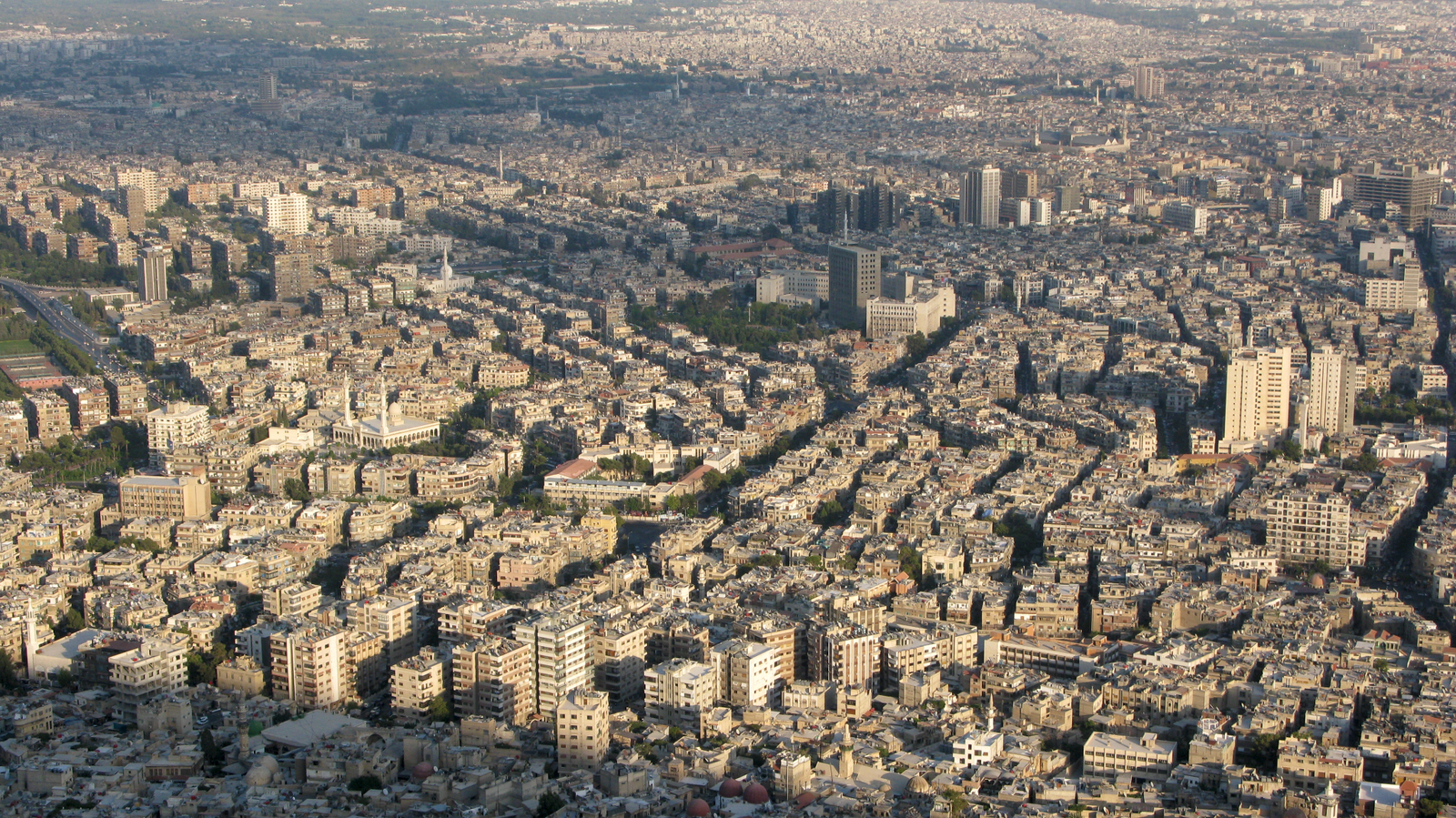
Vyacheslav Argenberg / vascoplanet.com — CC BY 4.0, via Wikimedia Commons
After more than a decade of conflict, Syria’s reconstruction is becoming a commercial reality. The World Bank estimates that rebuilding damaged physical assets could cost around USD 216 billion. Türkiye is likely to be especially important in this new phase: bilateral trade reached around USD 3.7 billion in 2025, and in August 2026 a Turkish trade delegation brought 40 companies to Damascus to explore trade and investment opportunities.
But reconstruction is not only about how quickly investment arrives. A human rights-centred approach asks who benefits, who participates and whose rights are protected. As Turkish business activity in Syria grows, another question follows: if that activity causes or contributes to harm, where does accountability lie?
What do we actually know about Turkish companies in Syria?
During the research, one thing became clear: there is no readily available public source bringing together which Turkish companies are currently operating in Syria and how.
To avoid overstating the picture, “current activity” was limited to active commercial services, verified local presence or major projects already in implementation. Among the largest verified activities were Turkish participation in a USD 7 billion, 5,000 MW energy programme and the USD 4 billion redevelopment of Damascus International Airport. Commercial aviation is also operating.
The picture goes beyond construction alone. Energy, infrastructure and transport are becoming important areas of Turkish involvement. Yet information remains scattered across company announcements, media reports and project disclosures. In a reconstruction process where transparency matters, knowing who is operating, through which entity and on what terms is part of the accountability picture.
Why the human rights risks matter
These are screening risks arising from the sectors and the conflict-affected setting. They are not allegations that Turkish companies operating in Syria have committed human rights abuses.
Construction and infrastructure projects can raise risks around labour rights, occupational health and safety, rapid recruitment and subcontracting chains. The ILO has identified decent work and occupational safety and health as important elements of Syria’s recovery.
Housing, land and property rights are equally important. Years of displacement and lost or contested documentation mean that land use, ownership, return and community impacts can become human rights issues. Reconstruction that fails to address these questions can deepen exclusion rather than repair it.
Earlier research on Turkish garment supply chains also documented serious risks affecting Syrian refugee workers in Türkiye. That does not show present abuse inside Syria, but it is a relevant warning if labour-intensive manufacturing and subcontracting expand across the border.
This is exactly the kind of setting in which heightened human rights due diligence matters. Businesses need to look beyond their direct operations and consider contractors, suppliers, local partners and wider conflict dynamics.
What happens if harm occurs?
Here, the Turkish legal framework becomes more difficult.
Business and human rights is receiving growing attention in Türkiye, but the legal framework remains fragmented. Türkiye has not yet developed a National Action Plan on Business and Human Rights and has no general mandatory human rights due diligence law. There is also no special civil claim for business-related human rights harm. A victim would instead have to rely on ordinary routes such as tort law and, in some cases, strict liability.
Responsibility depends heavily on how the business operates. A Turkish company working directly in Syria or through a branch is legally different from a Turkish parent operating through a separate Syrian subsidiary or subcontractor.
The nationality of the owner does not change this. A company incorporated in Türkiye remains a separate legal entity whether its shareholder is Turkish, Syrian or holds both nationalities. Syrian ownership is neither a shield nor an exemption, although it does not automatically make the shareholder personally liable.
A company based in Türkiye can in principle be sued before Turkish courts. The harder question may be applicable law: harm occurring in Syria will generally point towards Syrian law, although Turkish law may apply where the dispute is more closely connected to Türkiye.
Parent-company claims are harder still, especially when the case concerns a failure to prevent harm rather than a direct act. Turkish law generally requires a legal duty to act before an omission creates liability, and this route remains largely untested. A Syrian judgment may also face enforcement difficulties in Türkiye.
Türkiye’s OECD National Contact Point offers a non-judicial complaint route, but its limits are important: NCPs are not courts, participation in good offices is voluntary, and they cannot order a remedy.
A potential accountability gap
The result is a potential accountability gap. Turkish companies may become increasingly involved in Syria’s reconstruction while routes to remedy for people harmed by cross-border business activity remain uncertain.
For a worker injured on a project, a family whose land is affected or a community facing environmental harm, the difference between a branch, subsidiary and subcontractor is not academic. It may determine whether there is a realistic route to remedy at all.
My conclusion from the research is that this gap makes mandatory human rights due diligence a particularly important policy option for Türkiye. Such a framework would not solve every cross-border jurisdiction problem, but it could require companies to identify and address human rights risks before harm occurs, rather than leaving affected people to navigate fragmented legal routes afterwards.
Handled responsibly, deeper commercial ties could support Syria’s recovery while creating opportunities for Turkish businesses. That is why the human rights risks should be taken seriously from the beginning. Syria needs investment and reconstruction but rebuilding quickly and rebuilding responsibly are not competing goals. If Turkish companies are to become part of Syria’s recovery, accountability should be built into that role from the beginning.
Written by: Esmagül Akdeniz, Legal Intern, Human Rights & Business Unit