
April 15, 2026    | |   This post is also available in: Arabic

After more than a decade of conflict, Syria is entering a phase where reconstruction is no longer a distant prospect but an emerging reality. Cities and towns across the country bear the marks of prolonged violence and economic collapse. The scale of destruction is immense, and so too is the urgency of rebuilding. Yet reconstruction in Syria is not simply a technical or financial challenge. It is, fundamentally, a political and social process that will shape the country’s future for decades to come.

Reconstruction is not only about restoring infrastructure; it is about redefining the relationship between citizens, institutions, and the economy. If approached without adequate safeguards, it risks entrenching the very patterns of exclusion, corruption, and dispossession that contributed to the uprising in the first place. For this reason, Syria’s reconstruction must be guided by a human rights-centred approach, one that places accountability, inclusion, and the protection of rights at the heart of recovery.

Comparative experiences underscore the stakes. In Iraq, reconstruction was undermined by corruption and weak institutional oversight, eroding public trust. In Bosnia and Herzegovina, reconstruction reinforced ethnic divisions embedded in governance and property systems. In Lebanon, redevelopment prioritized elite interests, producing exclusion and inequality. Meanwhile, in Afghanistan, large-scale investment failed to build accountable institutions or deliver equitable outcomes. These cases point to a consistent lesson: reconstruction that neglects rights and governance risks reproducing instability rather than resolving it.

The Central Risk: HLP Rights and the Politics of Reconstruction

In Syria, the most immediate and consequential risks of reconstruction are concentrated around housing, land, and property (HLP) rights. Millions of Syrians have been displaced, many of whom lost homes, land, or the documentation needed to prove ownership. In this context, reconstruction without clear restitution and compensation mechanisms risks formalizing dispossession on a large scale.

Developments in Damascus offer a critical warning. The framework established under Decree 66 illustrates how redevelopment can transform areas of informal ownership into formalized investment zones through complex shareholding systems. In practice, these systems have proven inaccessible to many original residents, particularly those displaced or lacking documentation. What appears as urban planning can therefore operate as a mechanism for restructuring property relations in ways that exclude former inhabitants.

More recent controversies in Jobar and Qaboun suggest that similar dynamics persist. Proposals to redevelop these heavily damaged districts have raised concerns among displaced residents that reconstruction will proceed without meaningful guarantees for return, restitution, or fair compensation. Planning processes have advanced with limited transparency, reinforcing perceptions that redevelopment prioritizes large-scale investment over the inalienable rights of affected communities.

These dynamics are rooted in longer-standing patterns. Under Assad, legal and planning frameworks were used not simply to regulate urban development, but to exercise control over populations and territory. Laws enabled the reclassification and redevelopment of areas in ways that facilitated land seizure, often affecting communities already marginalized by displacement or perceived political affiliation.

At the same time, the Assad regime refrained from formalizing large informal neighbourhoods that expanded with urban growth and migration. As a result, significant segments of the population remained without secure property rights or legal recognition. These areas were often deprived of services and protections, while remaining subject to administrative and security control. During the conflict, many of these communities bore a disproportionate cost, further deepening their vulnerability.

Crucially, these patterns have been reinforced by limited transparency and weak public oversight. The role of Damascus Governorate in projects linked to Decree 66, as well as more recent planning in Jobar and Qaboun, has been marked by restricted access to information, unclear decision-making processes, and minimal opportunities for affected communities to participate or challenge redevelopment plans. In such conditions, reconstruction risks reinforcing governance practices in which law becomes a tool not only for urban development, but for managing populations and consolidating economic and political control.

Without a human rights-centred approach, these dynamics are likely to persist, embedding dispossession, exclusion, and inequality into the very foundations of reconstruction.

In addition, reconstruction involves large financial flows, procurement processes, and public-private partnerships. In contexts where institutions remain weak or opaque, these processes are particularly vulnerable to corruption and elite capture. In Syria, where politically connected business networks have long shaped economic life, reconstruction could reinforce these dynamics unless meaningful safeguards are introduced.

Corruption in reconstruction is not merely a technical issue. It has direct human rights implications. When resources are diverted or misallocated, the state’s ability to provide essential services, healthcare, education, housing, and infrastructure, is undermined. In this sense, corruption becomes a barrier to the realization of economic and social rights.

Reconstruction also risks deepening inequalities. Large-scale projects may concentrate investment in select areas while neglecting communities most affected by displacement and destruction. Without deliberate efforts to ensure inclusive development, reconstruction may produce uneven recovery, creating visible zones of redevelopment alongside persistent marginalization.

What a Human Rights-Centred Approach Requires

A human rights-centred reconstruction process integrates international human rights standards into economic recovery. It treats reconstruction not as an end in itself, but as a means of building a more just, inclusive, and accountable society.

Participation is essential. Communities affected by conflict and displacement must be meaningfully involved in decisions regarding redevelopment, housing, and local economic planning. Without participation, reconstruction risks reflecting the priorities of political and economic elites rather than the needs of residents.

Transparency and accountability are equally critical. Open procurement processes, accessible public records, and independent oversight mechanisms are necessary to prevent corruption and ensure that reconstruction resources are used in the public interest. This also requires strengthening institutions capable of investigating abuses and resolving disputes.

At the centre of any credible reconstruction strategy must be the protection of HLP rights. This includes mechanisms for restitution, compensation, and dispute resolution that are accessible to displaced populations, including refugees. Without such safeguards, reconstruction risks locking in patterns of dispossession and undermining prospects for return and reconciliation.

The role of the private sector is also important. Ensuring responsible business conduct requires adherence to international standards, including the UN Guiding Principles on Business and Human Rights. This entails conducting human rights due diligence and addressing potential and actual adverse human rights impacts.

Reconstruction in Syria is not a neutral or purely technical process. It reflects choices about who benefits, who participates, and whose rights are protected. The patterns already visible in Damascus, particularly around housing, land, and property rights, offer a clear warning of how reconstruction can entrench exclusion if left unchecked.

A human rights-centred approach does not stand in opposition to reconstruction; it is a prerequisite for its success. By embedding principles of inclusion, transparency, and accountability, Syria has the opportunity not only to rebuild what was destroyed, but to reshape the foundations of governance and economic life.

The challenge is not simply to reconstruct cities, but to ensure that reconstruction contributes to justice, return, and long-term stability.

Written by: Eyad Hamid, Head of Human Rights & Business Unit, SLDP


Rebuilding Syria: Why Reconstruction Must Be Human Rights-Centred

April 15, 2026    | |   This post is also available in: Arabic
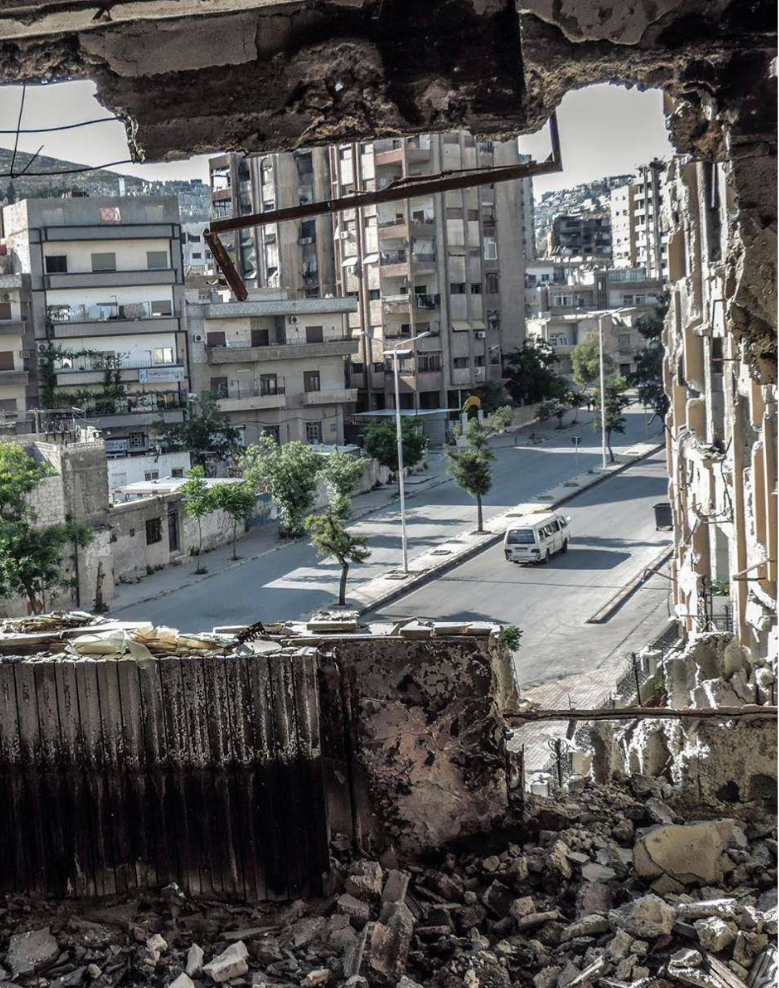
After more than a decade of conflict, Syria is entering a phase where reconstruction is no longer a distant prospect but an emerging reality. Cities and towns across the country bear the marks of prolonged violence and economic collapse. The scale of destruction is immense, and so too is the urgency of rebuilding. Yet reconstruction in Syria is not simply a technical or financial challenge. It is, fundamentally, a political and social process that will shape the country’s future for decades to come.

Reconstruction is not only about restoring infrastructure; it is about redefining the relationship between citizens, institutions, and the economy. If approached without adequate safeguards, it risks entrenching the very patterns of exclusion, corruption, and dispossession that contributed to the uprising in the first place. For this reason, Syria’s reconstruction must be guided by a human rights-centred approach, one that places accountability, inclusion, and the protection of rights at the heart of recovery.

Comparative experiences underscore the stakes. In Iraq, reconstruction was undermined by corruption and weak institutional oversight, eroding public trust. In Bosnia and Herzegovina, reconstruction reinforced ethnic divisions embedded in governance and property systems. In Lebanon, redevelopment prioritized elite interests, producing exclusion and inequality. Meanwhile, in Afghanistan, large-scale investment failed to build accountable institutions or deliver equitable outcomes. These cases point to a consistent lesson: reconstruction that neglects rights and governance risks reproducing instability rather than resolving it.

The Central Risk: HLP Rights and the Politics of Reconstruction

In Syria, the most immediate and consequential risks of reconstruction are concentrated around housing, land, and property (HLP) rights. Millions of Syrians have been displaced, many of whom lost homes, land, or the documentation needed to prove ownership. In this context, reconstruction without clear restitution and compensation mechanisms risks formalizing dispossession on a large scale.

Developments in Damascus offer a critical warning. The framework established under Decree 66 illustrates how redevelopment can transform areas of informal ownership into formalized investment zones through complex shareholding systems. In practice, these systems have proven inaccessible to many original residents, particularly those displaced or lacking documentation. What appears as urban planning can therefore operate as a mechanism for restructuring property relations in ways that exclude former inhabitants.

More recent controversies in Jobar and Qaboun suggest that similar dynamics persist. Proposals to redevelop these heavily damaged districts have raised concerns among displaced residents that reconstruction will proceed without meaningful guarantees for return, restitution, or fair compensation. Planning processes have advanced with limited transparency, reinforcing perceptions that redevelopment prioritizes large-scale investment over the inalienable rights of affected communities.

These dynamics are rooted in longer-standing patterns. Under Assad, legal and planning frameworks were used not simply to regulate urban development, but to exercise control over populations and territory. Laws enabled the reclassification and redevelopment of areas in ways that facilitated land seizure, often affecting communities already marginalized by displacement or perceived political affiliation.

At the same time, the Assad regime refrained from formalizing large informal neighbourhoods that expanded with urban growth and migration. As a result, significant segments of the population remained without secure property rights or legal recognition. These areas were often deprived of services and protections, while remaining subject to administrative and security control. During the conflict, many of these communities bore a disproportionate cost, further deepening their vulnerability.

Crucially, these patterns have been reinforced by limited transparency and weak public oversight. The role of Damascus Governorate in projects linked to Decree 66, as well as more recent planning in Jobar and Qaboun, has been marked by restricted access to information, unclear decision-making processes, and minimal opportunities for affected communities to participate or challenge redevelopment plans. In such conditions, reconstruction risks reinforcing governance practices in which law becomes a tool not only for urban development, but for managing populations and consolidating economic and political control.

Without a human rights-centred approach, these dynamics are likely to persist, embedding dispossession, exclusion, and inequality into the very foundations of reconstruction.

In addition, reconstruction involves large financial flows, procurement processes, and public-private partnerships. In contexts where institutions remain weak or opaque, these processes are particularly vulnerable to corruption and elite capture. In Syria, where politically connected business networks have long shaped economic life, reconstruction could reinforce these dynamics unless meaningful safeguards are introduced.

Corruption in reconstruction is not merely a technical issue. It has direct human rights implications. When resources are diverted or misallocated, the state’s ability to provide essential services, healthcare, education, housing, and infrastructure, is undermined. In this sense, corruption becomes a barrier to the realization of economic and social rights.

Reconstruction also risks deepening inequalities. Large-scale projects may concentrate investment in select areas while neglecting communities most affected by displacement and destruction. Without deliberate efforts to ensure inclusive development, reconstruction may produce uneven recovery, creating visible zones of redevelopment alongside persistent marginalization.

What a Human Rights-Centred Approach Requires

A human rights-centred reconstruction process integrates international human rights standards into economic recovery. It treats reconstruction not as an end in itself, but as a means of building a more just, inclusive, and accountable society.

Participation is essential. Communities affected by conflict and displacement must be meaningfully involved in decisions regarding redevelopment, housing, and local economic planning. Without participation, reconstruction risks reflecting the priorities of political and economic elites rather than the needs of residents.

Transparency and accountability are equally critical. Open procurement processes, accessible public records, and independent oversight mechanisms are necessary to prevent corruption and ensure that reconstruction resources are used in the public interest. This also requires strengthening institutions capable of investigating abuses and resolving disputes.

At the centre of any credible reconstruction strategy must be the protection of HLP rights. This includes mechanisms for restitution, compensation, and dispute resolution that are accessible to displaced populations, including refugees. Without such safeguards, reconstruction risks locking in patterns of dispossession and undermining prospects for return and reconciliation.

The role of the private sector is also important. Ensuring responsible business conduct requires adherence to international standards, including the UN Guiding Principles on Business and Human Rights. This entails conducting human rights due diligence and addressing potential and actual adverse human rights impacts.

Reconstruction in Syria is not a neutral or purely technical process. It reflects choices about who benefits, who participates, and whose rights are protected. The patterns already visible in Damascus, particularly around housing, land, and property rights, offer a clear warning of how reconstruction can entrench exclusion if left unchecked.

A human rights-centred approach does not stand in opposition to reconstruction; it is a prerequisite for its success. By embedding principles of inclusion, transparency, and accountability, Syria has the opportunity not only to rebuild what was destroyed, but to reshape the foundations of governance and economic life.

The challenge is not simply to reconstruct cities, but to ensure that reconstruction contributes to justice, return, and long-term stability.

Written by: Eyad Hamid, Head of Human Rights & Business Unit, SLDP


Advisory Services Enquiry


Please enable JavaScript in your browser to complete this form.
Preferred Mode of Consultation:

This will close in 0 seconds

استفسار عن خدمات الاستشارات


Please enable JavaScript in your browser to complete this form.
طريقة التواصل المفضلة

This will close in 0 seconds