
Jan 21, 2026    |   This post is also available in: Arabic

Mohammad Saber Hamsho is a Syrian businessman who emerged as one of the most prominent economic actors associated with the Assad regime during fourteen years of the Syrian uprising. Born in Damascus in 1966, Hamsho built a diversified business empire spanning construction, petrochemicals, telecommunications, media production, and engineering. His economic rise was closely tied to networks of political influence and patronage, particularly through his relationship with Maher al-Assad, brother of former president Bashar al-Assad.

Because of these affiliations, the United States and the European Union imposed sanctions on Hamsho and his companies early in the uprising, designating him as one of the regime’s key economic enablers. He was accused of operating as a commercial front for regime interests and of profiting from violence, pillage, and so-called reconstruction opportunities linked to military campaigns against civilian areas.

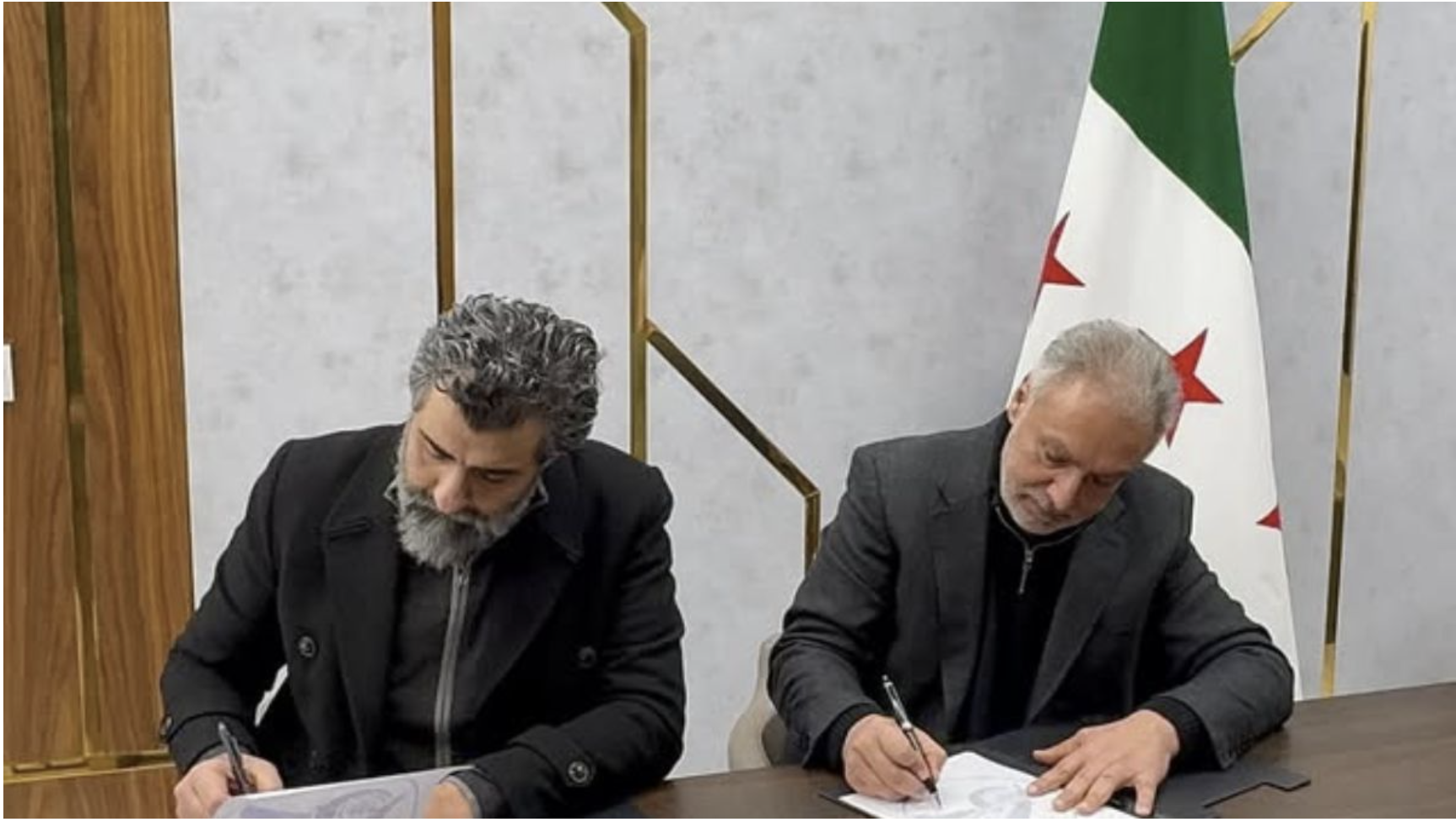
In late 2025 and early 2026, Hamsho returned to the center of public debate in Syria following an announcement by the newly formed Syrian government’s Commission for Combating Illicit Gain that it had reached a comprehensive settlement with him. Under this arrangement, Hamsho submitted extensive disclosures of his assets and relinquished significant holdings in exchange for regularizing the legal and financial status of his wealth. The Commission explicitly stated that the settlement is limited to the recovery of public funds obtained through illicit gain during the previous period and does not extend to criminal or penal accountability, including war-related crimes or what is commonly referred to as war profiteering.

The agreement immediately triggered widespread criticism both inside Syria and internationally. Many questioned how an individual widely perceived as complicit in grave abuses could secure an administrative settlement without judicial scrutiny, warning that such arrangements risk emptying accountability of its substance and entrenching selective impunity.

There is no sound legal framework in Syria’s existing legislation that authorizes the state to “regularize” the status of individuals suspected of serious financial crimes, let alone those potentially involved in facilitating grave violations, without subjecting them to judicial accountability. The absence of a legal framework here does not merely reflect the lack of an explicit prohibition, but rather the absence of any legislative text that clearly defines the competent authority, scope, mechanisms, safeguards, limits, and judicial oversight governing such settlements, including protections for victims’ rights. The executive branch cannot undertake measures of this nature without an explicit legal basis, which cannot be supplied by administrative delegation or a presidential decree that neither supersedes the law nor replaces judicial authority.

Under the general principles of national law, consistent with international legal obligations, the state bears the responsibility to investigate alleged crimes and determine individual criminal liability through fair and independent judicial proceedings.

The proper legal process requires investigation, referral to the judiciary, and the issuance of a final judgment of acquittal or conviction. No definitive legal effects arise from this process unless and until a final judicial decision is rendered. Within this framework, alternative approaches, such as settlements or non-judicial mechanisms, can only be contemplated in an exceptionally narrow context, after judicial proceedings have been completed, and in a manner that fully safeguards victims’ rights to accountability, remedy, and reparation.

What occurred in Hamsho’s case circumvented this legal sequence. A financial and administrative settlement was concluded outside the judiciary through a committee that, under its founding decree, possesses no judicial authority and no mandate to determine criminal liability. Even where such settlements are formally presented as not granting immunity or closing criminal files, their conclusion prior to judicial proceedings effectively pre-empts the ordinary course of accountability. Nor can this step be legally justified by reference to a transitional justice law that has yet to be enacted. Even if later associated with such a framework, the retroactive use of legislation to legitimize prior arrangements departs from established legal principles governing accountability processes.

The conclusion is difficult to avoid. This agreement cannot be considered consistent with national legal frameworks. Rather, it raises serious concerns about the institutionalization of exceptional settlements that undermine the rule of law and entrench selective impunity.

At the international level, international law imposes a clear obligation on states to investigate and prosecute international crimes, including war crimes and crimes against humanity. This obligation applies not only to armed forces or non-state armed actors, but to all actors, including economic ones.

Rule 158 of the ICRC’s Customary International Humanitarian Law Study, binding on all states, requires the investigation and prosecution of war crimes allegedly committed by a state’s nationals, placing Hamsho squarely within the scope of this obligation.

Recent years have seen a marked increase in corporate accountability cases involving alleged complicity in international crimes. In France, the cement giant Lafarge and several of its executives are currently on trial for financing terrorism and violating international sanctions, while investigations into the company’s complicity in crimes against humanity remain ongoing. In Sweden, former executives of Lundin Oil are on trial for complicity in war crimes committed in South Sudan. These cases reflect a growing international trend toward holding economic actors accountable for their involvement in crimes that shock the conscience of humanity.

This focus is not new. At the Nuremberg Trials, senior executives from industries such as steel, chemicals, and weapons manufacturing were prosecuted for complicity in Nazi atrocities.

Accordingly, any decision by the transitional Syrian government to absolve Hamsho of responsibility for aiding or abetting large-scale atrocities committed by the Assad regime would constitute a serious breach of its obligations under international law and a clear violation of victims’ rights.

Beyond questions of legality, the settlement with Hamsho also carries serious symbolic and communicative consequences that risk undermining confidence in transitional justice and accountability pathways.

In the days following the announcement, demonstrators across Syria protested the agreement. Syrians, including directly affected individuals, gathered in cities and neighborhoods severely impacted by Hamsho’s activities, such as Jobar, Daraya, and Qaboun. Victims emphasized that the state’s settlement with Hamsho does not extinguish their individual claims against him, which remain valid and must be respected.

Public frustration over the absence of redress and reparations reverberated in the streets and across social media. Others warned that “normalizing relations” with one of the regime’s principal financiers signals a continuation of the pre-December 2024 order, in which wealth and political connections enabled individuals to evade justice.

In response, the National Transitional Justice Commission clarified that administrative settlements do not replace judicial accountability within the transitional justice process. The statement further emphasized that financing serious crimes and human rights violations, conduct applicable to Hamsho’s case, constitutes an offense that cannot be subject to amnesty.

Impunity, and even the perception of impunity, undermines transitional justice, which depends on the trust and participation of affected rights-holders. If Syrian victims perceive that decisions concerning justice are made without their meaningful involvement, they may lose faith in transitional justice altogether and disengage from future processes, including truth-seeking mechanisms and prosecutions. Moreover, failing to dismantle the power and influence of former high-level perpetrators leaves the risk of recurrence insufficiently addressed.

For these reasons, if Syria’s transitional justice project is to retain credibility, the Hamsho settlement cannot be treated as a final resolution. At a minimum, authorities must clearly and collectively affirm the separation between asset recovery and criminal accountability, ensuring that financial settlements do not terminate or pre-empt judicial proceedings. Any recovered assets must be transparently linked to victim reparations, rather than treated as discretionary state revenue.

More fundamentally, credible investigations into Hamsho’s alleged role in financing and facilitating serious crimes must proceed through independent judicial channels, whether domestically or through international cooperation. Victims must be recognized as rights-holders, not as bystanders to elite bargains, and must be granted standing to pursue their claims.

Ultimately, the choice facing Syria is not between economic recovery and justice. Durable recovery depends on the rule of law. Exceptional deals with powerful figures may yield short-term financial gains, but they carry long-term costs: eroded legitimacy, weakened institutions, and a hollowed-out transitional justice process. If reconciliation is to be more than a slogan, it must be grounded in accountability.

Mohammad Hamsho’s “Reconciliation” with the Government: A Legal and Human Rights Based Perspective

Jan 21, 2026    |   This post is also available in: Arabic
Mohammad Saber Hamsho is a Syrian businessman who emerged as one of the most prominent economic actors associated with the Assad regime during fourteen years of the Syrian uprising. Born in Damascus in 1966, Hamsho built a diversified business empire spanning construction, petrochemicals, telecommunications, media production, and engineering. His economic rise was closely tied to networks of political influence and patronage, particularly through his relationship with Maher al-Assad, brother of former president Bashar al-Assad.

Because of these affiliations, the United States and the European Union imposed sanctions on Hamsho and his companies early in the uprising, designating him as one of the regime’s key economic enablers. He was accused of operating as a commercial front for regime interests and of profiting from violence, pillage, and so-called reconstruction opportunities linked to military campaigns against civilian areas.

In late 2025 and early 2026, Hamsho returned to the center of public debate in Syria following an announcement by the newly formed Syrian government’s Commission for Combating Illicit Gain that it had reached a comprehensive settlement with him. Under this arrangement, Hamsho submitted extensive disclosures of his assets and relinquished significant holdings in exchange for regularizing the legal and financial status of his wealth. The Commission explicitly stated that the settlement is limited to the recovery of public funds obtained through illicit gain during the previous period and does not extend to criminal or penal accountability, including war-related crimes or what is commonly referred to as war profiteering.

The agreement immediately triggered widespread criticism both inside Syria and internationally. Many questioned how an individual widely perceived as complicit in grave abuses could secure an administrative settlement without judicial scrutiny, warning that such arrangements risk emptying accountability of its substance and entrenching selective impunity.

There is no sound legal framework in Syria’s existing legislation that authorizes the state to “regularize” the status of individuals suspected of serious financial crimes, let alone those potentially involved in facilitating grave violations, without subjecting them to judicial accountability. The absence of a legal framework here does not merely reflect the lack of an explicit prohibition, but rather the absence of any legislative text that clearly defines the competent authority, scope, mechanisms, safeguards, limits, and judicial oversight governing such settlements, including protections for victims’ rights. The executive branch cannot undertake measures of this nature without an explicit legal basis, which cannot be supplied by administrative delegation or a presidential decree that neither supersedes the law nor replaces judicial authority.

Under the general principles of national law, consistent with international legal obligations, the state bears the responsibility to investigate alleged crimes and determine individual criminal liability through fair and independent judicial proceedings.

The proper legal process requires investigation, referral to the judiciary, and the issuance of a final judgment of acquittal or conviction. No definitive legal effects arise from this process unless and until a final judicial decision is rendered. Within this framework, alternative approaches, such as settlements or non-judicial mechanisms, can only be contemplated in an exceptionally narrow context, after judicial proceedings have been completed, and in a manner that fully safeguards victims’ rights to accountability, remedy, and reparation.

What occurred in Hamsho’s case circumvented this legal sequence. A financial and administrative settlement was concluded outside the judiciary through a committee that, under its founding decree, possesses no judicial authority and no mandate to determine criminal liability. Even where such settlements are formally presented as not granting immunity or closing criminal files, their conclusion prior to judicial proceedings effectively pre-empts the ordinary course of accountability. Nor can this step be legally justified by reference to a transitional justice law that has yet to be enacted. Even if later associated with such a framework, the retroactive use of legislation to legitimize prior arrangements departs from established legal principles governing accountability processes.

The conclusion is difficult to avoid. This agreement cannot be considered consistent with national legal frameworks. Rather, it raises serious concerns about the institutionalization of exceptional settlements that undermine the rule of law and entrench selective impunity.

At the international level, international law imposes a clear obligation on states to investigate and prosecute international crimes, including war crimes and crimes against humanity. This obligation applies not only to armed forces or non-state armed actors, but to all actors, including economic ones.

Rule 158 of the ICRC’s Customary International Humanitarian Law Study, binding on all states, requires the investigation and prosecution of war crimes allegedly committed by a state’s nationals, placing Hamsho squarely within the scope of this obligation.

Recent years have seen a marked increase in corporate accountability cases involving alleged complicity in international crimes. In France, the cement giant Lafarge and several of its executives are currently on trial for financing terrorism and violating international sanctions, while investigations into the company’s complicity in crimes against humanity remain ongoing. In Sweden, former executives of Lundin Oil are on trial for complicity in war crimes committed in South Sudan. These cases reflect a growing international trend toward holding economic actors accountable for their involvement in crimes that shock the conscience of humanity.

This focus is not new. At the Nuremberg Trials, senior executives from industries such as steel, chemicals, and weapons manufacturing were prosecuted for complicity in Nazi atrocities.

Accordingly, any decision by the transitional Syrian government to absolve Hamsho of responsibility for aiding or abetting large-scale atrocities committed by the Assad regime would constitute a serious breach of its obligations under international law and a clear violation of victims’ rights.

Beyond questions of legality, the settlement with Hamsho also carries serious symbolic and communicative consequences that risk undermining confidence in transitional justice and accountability pathways.

In the days following the announcement, demonstrators across Syria protested the agreement. Syrians, including directly affected individuals, gathered in cities and neighborhoods severely impacted by Hamsho’s activities, such as Jobar, Daraya, and Qaboun. Victims emphasized that the state’s settlement with Hamsho does not extinguish their individual claims against him, which remain valid and must be respected.

Public frustration over the absence of redress and reparations reverberated in the streets and across social media. Others warned that “normalizing relations” with one of the regime’s principal financiers signals a continuation of the pre-December 2024 order, in which wealth and political connections enabled individuals to evade justice.

In response, the National Transitional Justice Commission clarified that administrative settlements do not replace judicial accountability within the transitional justice process. The statement further emphasized that financing serious crimes and human rights violations, conduct applicable to Hamsho’s case, constitutes an offense that cannot be subject to amnesty.

Impunity, and even the perception of impunity, undermines transitional justice, which depends on the trust and participation of affected rights-holders. If Syrian victims perceive that decisions concerning justice are made without their meaningful involvement, they may lose faith in transitional justice altogether and disengage from future processes, including truth-seeking mechanisms and prosecutions. Moreover, failing to dismantle the power and influence of former high-level perpetrators leaves the risk of recurrence insufficiently addressed.

For these reasons, if Syria’s transitional justice project is to retain credibility, the Hamsho settlement cannot be treated as a final resolution. At a minimum, authorities must clearly and collectively affirm the separation between asset recovery and criminal accountability, ensuring that financial settlements do not terminate or pre-empt judicial proceedings. Any recovered assets must be transparently linked to victim reparations, rather than treated as discretionary state revenue.

More fundamentally, credible investigations into Hamsho’s alleged role in financing and facilitating serious crimes must proceed through independent judicial channels, whether domestically or through international cooperation. Victims must be recognized as rights-holders, not as bystanders to elite bargains, and must be granted standing to pursue their claims.

Ultimately, the choice facing Syria is not between economic recovery and justice. Durable recovery depends on the rule of law. Exceptional deals with powerful figures may yield short-term financial gains, but they carry long-term costs: eroded legitimacy, weakened institutions, and a hollowed-out transitional justice process. If reconciliation is to be more than a slogan, it must be grounded in accountability.

Advisory Services Enquiry


Please enable JavaScript in your browser to complete this form.
Preferred Mode of Consultation:

This will close in 0 seconds

استفسار عن خدمات الاستشارات


Please enable JavaScript in your browser to complete this form.
طريقة التواصل المفضلة

This will close in 0 seconds