
July 1, 2026    | |   This post is also available in: Arabic

As Syria enters a new phase of recovery and reconstruction, few issues are more consequential than the future of its informal settlements. Across the country, millions of Syrians have lived for decades in neighbourhoods classified as “informal” or “unregulated.” These communities are often portrayed as planning failures, legal irregularities, or obstacles to modern urban development. Yet such characterisations overlook a fundamental reality: informal settlements are not the result of individual wrongdoing. They are the product of decades of state failure to provide affordable housing, effective urban planning, and accessible land management systems.

Treating residents of informal settlements as second-class property holders would not only be unjust; it would undermine the very foundations of a sustainable and rights-respecting reconstruction process.

Informality Was Produced by the State

Before the conflict, informal housing constituted between 30 and 50 percent of Syria’s housing stock. Entire districts of Damascus, Aleppo, Homs, and other cities developed outside formal planning frameworks. These neighbourhoods became home to millions of Syrians, particularly lower-income families seeking affordable housing close to economic opportunities.
This reality did not emerge because Syrians rejected the law. Rather, it emerged because successive governments under the Assad regime failed to provide sufficient affordable housing and created a rigid and dysfunctional urban planning system that could not keep pace with demographic growth and rural-to-urban migration. Restrictive land policies, inefficient planning procedures, weak implementation capacity, and corruption collectively pushed large segments of the population into informal housing solutions.

At the same time, the state gradually normalised these areas by extending electricity, water, roads, schools, and public services. Informal settlements were tolerated, taxed, serviced, and politically integrated. Residents purchased homes, invested life savings, raised families, and built communities over generations. Many possessed various forms of ownership documentation, even where formal cadastral registration was incomplete. Informality, therefore, did not signify the absence of social legitimacy or genuine property interests.

The challenge facing Syria today is that many reconstruction initiatives continue to approach informal settlements primarily as planning problems rather than rights-holders’ communities.
This approach is dangerous because it risks reproducing one of the central injustices of the conflict era: the use of urban planning and redevelopment to dispossess vulnerable populations. As the case of Marota and Basilia Cities projects organised under Decree 66 and Law 10 demonstrates, legal and planning instruments were used to facilitate property confiscation, forced displacement, and demographic engineering. Entire neighbourhoods were demolished under the language of redevelopment while residents received little meaningful protection or compensation.

If reconstruction authorities now argue that residents of informal settlements deserve less compensation because their homes were not formally zoned, they would effectively punish communities for a condition largely created by decades of state policy failures.

The legal status of a neighbourhood should not determine the value of human dignity, security, or belonging.

Equal Compensation Is a Matter of Justice

Housing, land, and property rights are not limited to those possessing perfect paperwork or residing within formally planned neighbourhoods. International standards increasingly recognise a broad range of tenure arrangements and require protection against arbitrary displacement.

In practical terms, this means that residents of informal settlements should be entitled to compensation mechanisms equivalent to those available to residents of formally zoned areas when their properties are expropriated, demolished, or redeveloped.

Equal compensation does not necessarily mean identical compensation formulas. Authorities may need to account for different ownership arrangements and documentation systems. However, the underlying principle must remain clear: families should not receive reduced protection simply because they lived in an informal area.

A family in informal districts of Homs, Damascus, Aleppo, Deir Az-Zor or others, may have occupied and invested in a property for decades. Their economic loss, social disruption, and emotional attachment to place are no less significant than those experienced by residents of formally registered neighbourhoods. Indeed, because many informal settlements housed lower-income communities, unequal compensation risks deepening existing inequalities and further marginalising populations that have already borne the brunt of conflict and displacement.
Many of these communities were also at the forefront of the Syrian revolution and subsequently faced some of the harshest forms of collective punishment by the Assad regime. These neighbourhoods were subjected to siege, bombardment, forced displacement, and redevelopment policies that stripped residents of their homes and property rights. For many families, the loss of housing was not simply a consequence of conflict but part of a broader pattern of political retaliation. Any reconstruction framework that fails to restore their rights, or that provides them with lesser protections than residents of formal areas, risks reinforcing these injustices. Beyond the moral and legal concerns, such an approach could generate renewed social tensions, undermine confidence in state institutions, and weaken the credibility of the governing authorities at a moment when trust, inclusion, and national reconciliation are essential to Syria’s recovery.

Reconstruction Depends on Recognising Informal Communities

This debate is not merely about fairness. It is also about the success of reconstruction itself.
Syria’s recovery will require the return of displaced populations, the restoration of public trust, and the reintegration of fractured communities. None of these objectives can be achieved if millions of Syrians fear that reconstruction will become another mechanism for exclusion or dispossession.

Experiences from around the world demonstrate that attempts to erase informal settlements through top-down redevelopment often generate resistance, social fragmentation, and prolonged disputes. Sustainable urban recovery is more likely when authorities recognise existing communities, regularise tenure where possible, and involve residents in planning decisions affecting their future.

For Syria, this means moving beyond the simplistic distinction between “formal” and “informal.” The real question is not whether a neighbourhood complied with planning regulations decades ago. The real question is whether reconstruction policies respect the rights and legitimate interests of the people who live there.

A Rights-Based Path Forward

A rights-based reconstruction framework should therefore include several core principles.

First, informal settlements should be recognised as a structural feature of Syria’s urban development history rather than as isolated legal violations.

Second, residents of informal settlements should enjoy equal access to restitution, compensation, and dispute-resolution mechanisms.

Third, compensation schemes should account for diverse forms of evidence of ownership and occupancy, including customary arrangements, municipal records, utility bills, witness testimony, and other forms of proof.

Fourth, urban redevelopment projects should prioritise in-situ upgrading and regularisation wherever feasible rather than large-scale displacement, provided that communities are duly consulted prior to any such project’s design or implementation.

Finally, affected communities must be meaningfully consulted throughout planning and reconstruction processes.

Building Cities Without Exclusion

The reconstruction of Syria’s cities will inevitably require difficult choices about land use, infrastructure, and urban development. Yet one principle should remain non-negotiable: informality must not become a justification for unequal rights.

Informal settlements were the product of decades of neglect, planning failures, and structural shortcomings. Their residents should not be asked to bear the costs of those failures again.

If reconstruction is to contribute to justice, stability, and long-term recovery, it must recognise that housing, land, and property rights belong to all Syrians, not only those fortunate enough to have lived within the boundaries of a zoning plan. The future of Syria’s cities depends not on erasing informal communities, but on integrating them as equal stakeholders in the country’s recovery.

Written by: Eyad Hamid, Head of Human Rights & Business Unit, SLDP

Informal Settlements Are Not Informal Rights: Why Syria’s Reconstruction Must Guarantee Equal Housing, Land, and Property Rights for All

July 1, 2026    | |   This post is also available in: Arabic
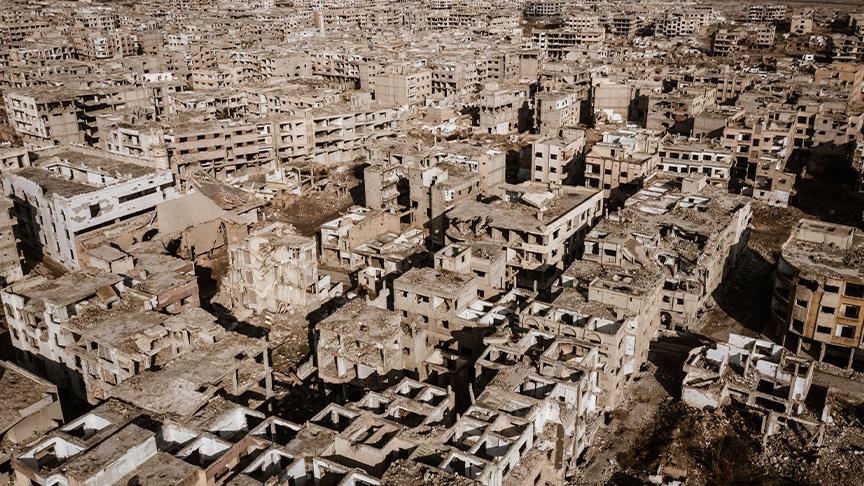
As Syria enters a new phase of recovery and reconstruction, few issues are more consequential than the future of its informal settlements. Across the country, millions of Syrians have lived for decades in neighbourhoods classified as “informal” or “unregulated.” These communities are often portrayed as planning failures, legal irregularities, or obstacles to modern urban development. Yet such characterisations overlook a fundamental reality: informal settlements are not the result of individual wrongdoing. They are the product of decades of state failure to provide affordable housing, effective urban planning, and accessible land management systems.

Treating residents of informal settlements as second-class property holders would not only be unjust; it would undermine the very foundations of a sustainable and rights-respecting reconstruction process.

Informality Was Produced by the State

Before the conflict, informal housing constituted between 30 and 50 percent of Syria’s housing stock. Entire districts of Damascus, Aleppo, Homs, and other cities developed outside formal planning frameworks. These neighbourhoods became home to millions of Syrians, particularly lower-income families seeking affordable housing close to economic opportunities.
This reality did not emerge because Syrians rejected the law. Rather, it emerged because successive governments under the Assad regime failed to provide sufficient affordable housing and created a rigid and dysfunctional urban planning system that could not keep pace with demographic growth and rural-to-urban migration. Restrictive land policies, inefficient planning procedures, weak implementation capacity, and corruption collectively pushed large segments of the population into informal housing solutions.

At the same time, the state gradually normalised these areas by extending electricity, water, roads, schools, and public services. Informal settlements were tolerated, taxed, serviced, and politically integrated. Residents purchased homes, invested life savings, raised families, and built communities over generations. Many possessed various forms of ownership documentation, even where formal cadastral registration was incomplete. Informality, therefore, did not signify the absence of social legitimacy or genuine property interests.

The challenge facing Syria today is that many reconstruction initiatives continue to approach informal settlements primarily as planning problems rather than rights-holders’ communities.
This approach is dangerous because it risks reproducing one of the central injustices of the conflict era: the use of urban planning and redevelopment to dispossess vulnerable populations. As the case of Marota and Basilia Cities projects organised under Decree 66 and Law 10 demonstrates, legal and planning instruments were used to facilitate property confiscation, forced displacement, and demographic engineering. Entire neighbourhoods were demolished under the language of redevelopment while residents received little meaningful protection or compensation.

If reconstruction authorities now argue that residents of informal settlements deserve less compensation because their homes were not formally zoned, they would effectively punish communities for a condition largely created by decades of state policy failures.

The legal status of a neighbourhood should not determine the value of human dignity, security, or belonging.

Equal Compensation Is a Matter of Justice

Housing, land, and property rights are not limited to those possessing perfect paperwork or residing within formally planned neighbourhoods. International standards increasingly recognise a broad range of tenure arrangements and require protection against arbitrary displacement.

In practical terms, this means that residents of informal settlements should be entitled to compensation mechanisms equivalent to those available to residents of formally zoned areas when their properties are expropriated, demolished, or redeveloped.

Equal compensation does not necessarily mean identical compensation formulas. Authorities may need to account for different ownership arrangements and documentation systems. However, the underlying principle must remain clear: families should not receive reduced protection simply because they lived in an informal area.

A family in informal districts of Homs, Damascus, Aleppo, Deir Az-Zor or others, may have occupied and invested in a property for decades. Their economic loss, social disruption, and emotional attachment to place are no less significant than those experienced by residents of formally registered neighbourhoods. Indeed, because many informal settlements housed lower-income communities, unequal compensation risks deepening existing inequalities and further marginalising populations that have already borne the brunt of conflict and displacement.
Many of these communities were also at the forefront of the Syrian revolution and subsequently faced some of the harshest forms of collective punishment by the Assad regime. These neighbourhoods were subjected to siege, bombardment, forced displacement, and redevelopment policies that stripped residents of their homes and property rights. For many families, the loss of housing was not simply a consequence of conflict but part of a broader pattern of political retaliation. Any reconstruction framework that fails to restore their rights, or that provides them with lesser protections than residents of formal areas, risks reinforcing these injustices. Beyond the moral and legal concerns, such an approach could generate renewed social tensions, undermine confidence in state institutions, and weaken the credibility of the governing authorities at a moment when trust, inclusion, and national reconciliation are essential to Syria’s recovery.

Reconstruction Depends on Recognising Informal Communities

This debate is not merely about fairness. It is also about the success of reconstruction itself.
Syria’s recovery will require the return of displaced populations, the restoration of public trust, and the reintegration of fractured communities. None of these objectives can be achieved if millions of Syrians fear that reconstruction will become another mechanism for exclusion or dispossession.

Experiences from around the world demonstrate that attempts to erase informal settlements through top-down redevelopment often generate resistance, social fragmentation, and prolonged disputes. Sustainable urban recovery is more likely when authorities recognise existing communities, regularise tenure where possible, and involve residents in planning decisions affecting their future.

For Syria, this means moving beyond the simplistic distinction between “formal” and “informal.” The real question is not whether a neighbourhood complied with planning regulations decades ago. The real question is whether reconstruction policies respect the rights and legitimate interests of the people who live there.

A Rights-Based Path Forward

A rights-based reconstruction framework should therefore include several core principles.

First, informal settlements should be recognised as a structural feature of Syria’s urban development history rather than as isolated legal violations.

Second, residents of informal settlements should enjoy equal access to restitution, compensation, and dispute-resolution mechanisms.

Third, compensation schemes should account for diverse forms of evidence of ownership and occupancy, including customary arrangements, municipal records, utility bills, witness testimony, and other forms of proof.

Fourth, urban redevelopment projects should prioritise in-situ upgrading and regularisation wherever feasible rather than large-scale displacement, provided that communities are duly consulted prior to any such project’s design or implementation.

Finally, affected communities must be meaningfully consulted throughout planning and reconstruction processes.

Building Cities Without Exclusion

The reconstruction of Syria’s cities will inevitably require difficult choices about land use, infrastructure, and urban development. Yet one principle should remain non-negotiable: informality must not become a justification for unequal rights.

Informal settlements were the product of decades of neglect, planning failures, and structural shortcomings. Their residents should not be asked to bear the costs of those failures again.

If reconstruction is to contribute to justice, stability, and long-term recovery, it must recognise that housing, land, and property rights belong to all Syrians, not only those fortunate enough to have lived within the boundaries of a zoning plan. The future of Syria’s cities depends not on erasing informal communities, but on integrating them as equal stakeholders in the country’s recovery.

Written by: Eyad Hamid, Head of Human Rights & Business Unit, SLDP

Advisory Services Enquiry


Please enable JavaScript in your browser to complete this form.
Preferred Mode of Consultation:

This will close in 0 seconds

استفسار عن خدمات الاستشارات


Please enable JavaScript in your browser to complete this form.
طريقة التواصل المفضلة

This will close in 0 seconds