
Des 12, 2025  |   This post is also available in: Arabic
At the 14th UN Forum on Business and Human Rights in Geneva last month, the panel ’Strengthening Accountability for Environmental Harm: Pathways for Transformative Business Practices’ offered a striking reminder of how the deeply the global conversation on environmental protection has shifted. No longer framed as a technical or sectoral concern, environmental destruction is increasingly recognised as a human rights crisis, a driver of instability, and, most notably, a potential international crime.

The normative framework already places a responsibility on public and private actors to refrain from posing environmental harm. The UN Guiding Principles on Business and Human Rights sets expectations for businesses to respect both human rights and the environment, including international humanitarian law in situations of armed conflict—which provides a number of normative prescriptions in relation to the environment in international and non-international armed conflicts. In July 2022, the UN General Assembly adopted a resolution recognising the right to a clean, healthy and sustainable environment, underscoring the interdependent nature of human rights and environmental protection. While the Rome Statute offers limited environmental protection in non-international armed conflicts, environmental damage may still constitute material elements of other crimes—such as the war crime of pillage. Still, a gap remains: the law struggles to capture deliberate, systematic, and profit-driven environmental harm.

In Syria, the fragmentation of political and economic governance, the destruction of infrastructure, and the collapse of state oversight have produced some of the region’s most severe environmental crises. In the northeast, the dismantling of formal oil infrastructure and the delegation of extraction to contractors associated with armed non-state actors triggered the proliferation of primitive oil “burners”. These makeshift refineries, run by local businesses and informal networks, produced thick plumes of toxic smoke, radioactive by-products, and riverbank contamination. Communities continue to bear the health burdens: cancers, miscarriages, respiratory disease, poisoned water supplies, and degraded soil.

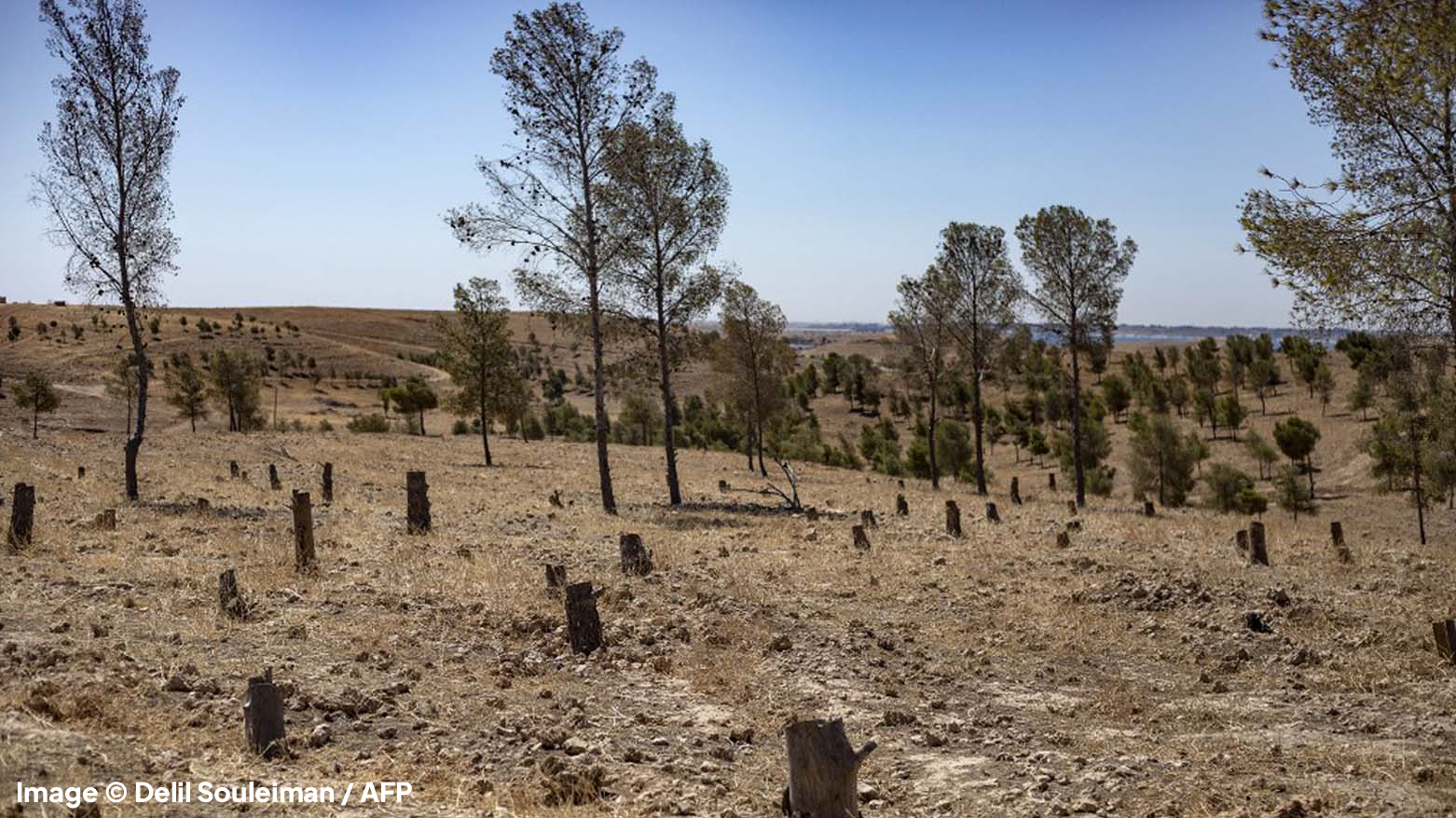
Furthermore, fuel scarcity and economic desperation fuelled a thriving black-market logging industry. Organised traders, charcoal producers, armed groups, and business actors linked to political elites profited from large-scale deforestation across various regions. Compounding this, many forest fires were deliberately set—sometimes by business elites tied to the Assad regime—seeking to clear land for construction, industrial use, or lucrative charcoal production. These fires have erased destroyed livelihoods and permanently altered fragile ecosystems.

Against the backdrop of stark environmental devastation globally, and the lack of political will to regulate unfettered corporate power and enforce accountability, the momentum around recognising ecocide as an international crime has grown rapidly.

The Independent Expert Panel for the Legal Definition of Ecocide proposed in 2021 that:

“Ecocide” means unlawful or wanton acts committed with knowledge that there is a substantial likelihood of severe and either widespread or long-term damage to the environment being caused by those acts.

Kate Mackinstosh, Deputy Co-Chair of the Expert Panel, noted that ecocide has been introduced in statutes in Belgium and Chile, while legislative proposals are advancing in Brazil, Mexico, Italy, Scotland, Spain and more. By May 2026, EU Member States will be required to criminalise conduct equivalent to ecocide under the new Environmental Crime Directive. At the international level, small-island developing states, namely Vanuatu, Fiji, and Samoa, as well as the Democratic Republic of Congo, have formally proposed amending the Rome Statute of the International Criminal Court to include ecocide as the fifth international crime, alongside genocide, crimes against humanity, war crimes, and aggression. It stands to reason that ecocide is a rapidly evolving legal project, and one that is gaining currency. The question remains: what difference will criminalizing ecocide make?

Mackintosh outlined the key ways in which recognizing ecocide could transform business behaviour and level the playing field:

1. A Higher Level of Deterrence
Civil and administrative penalties rarely deter large corporations. But the allegation of an international crime, combined with the legal, financial, and
reputational fallout for executives and investors fundamentally shifts the risk calculus. Under international criminal law, liability is personal: executives cannot outsource responsibility.

2. Stronger, Earlier, More Meaningful Due Diligence
Ecocide forces companies to rethink projects at inception, not after harm occurs. Businesses must ask:
Is this project fundamentally safe? Who bears the risk? Are vulnerable communities disproportionately exposed?

3. Removing the Burden from Victims
Civil litigation places the burden on victims to seek justice. Criminal law shifts accountability to the state and international community: environmental destruction becomes recognised not as a private dispute but as a crime that affects humanity as a whole.

Syria’s current environmental legislation remains poorly enforced and ill-suited to the scale of wartime destruction. The political transition offers a rare opportunity to modernise these laws to reflect the country’s current crises. As reconstruction-linked

investment flows begin to pour into the high-risk setting, a robust criminal code has never been more critical.

At the Human Rights and Business Unit, we have consistently highlighted the legal and financial risks businesses face when they fail to account for environmental and conflict-related harms. Our recent recommendations to companies exploring investment in Syria emphasise environmental due diligence as integral to conflict-sensitive, rights-respecting business conduct. In November 2025, shortly before the UN Forum, we hosted Syria’s first conference on business and human rights, dedicating a full panel to the environmental challenges of reconstruction. The transitional government will have the responsibility—and the opportunity—to build a robust regulatory framework that reins in foreign investors, protects communities, and prioritises sustainable recovery.

Criminalising ecocide would not solve Syria’s long standing environmental challenges, but it would set a powerful normative baseline: no actor, business or otherwise, may profit from the destruction of Syria’s environment without facing the highest level of accountability.

As Mackintosh put it:

“Ecocide is not a silver bullet, but it does shift incentives in a powerful way…When incentives change, behaviour changes.”

Written by: Alreem Kamal, Legal Officer at the Human Rights & Business Unit of SLDP

Criminalizing Ecocide: Reflections from the 14th UN Forum on Business and Human Rights

Des 12, 2025  |   This post is also available in: Arabic

At the 14th UN Forum on Business and Human Rights in Geneva last month, the panel ’Strengthening Accountability for Environmental Harm: Pathways for Transformative Business Practices’ offered a striking reminder of how the deeply the global conversation on environmental protection has shifted. No longer framed as a technical or sectoral concern, environmental destruction is increasingly recognised as a human rights crisis, a driver of instability, and, most notably, a potential international crime.

The normative framework already places a responsibility on public and private actors to refrain from posing environmental harm. The UN Guiding Principles on Business and Human Rights sets expectations for businesses to respect both human rights and the environment, including international humanitarian law in situations of armed conflict—which provides a number of normative prescriptions in relation to the environment in international and non-international armed conflicts. In July 2022, the UN General Assembly adopted a resolution recognising the right to a clean, healthy and sustainable environment, underscoring the interdependent nature of human rights and environmental protection. While the Rome Statute offers limited environmental protection in non-international armed conflicts, environmental damage may still constitute material elements of other crimes—such as the war crime of pillage. Still, a gap remains: the law struggles to capture deliberate, systematic, and profit-driven environmental harm.

In Syria, the fragmentation of political and economic governance, the destruction of infrastructure, and the collapse of state oversight have produced some of the region’s most severe environmental crises. In the northeast, the dismantling of formal oil infrastructure and the delegation of extraction to contractors associated with armed non-state actors triggered the proliferation of primitive oil “burners”. These makeshift refineries, run by local businesses and informal networks, produced thick plumes of toxic smoke, radioactive by-products, and riverbank contamination. Communities continue to bear the health burdens: cancers, miscarriages, respiratory disease, poisoned water supplies, and degraded soil.

Furthermore, fuel scarcity and economic desperation fuelled a thriving black-market logging industry. Organised traders, charcoal producers, armed groups, and business actors linked to political elites profited from large-scale deforestation across various regions. Compounding this, many forest fires were deliberately set—sometimes by business elites tied to the Assad regime—seeking to clear land for construction, industrial use, or lucrative charcoal production. These fires have erased destroyed livelihoods and permanently altered fragile ecosystems.

Against the backdrop of stark environmental devastation globally, and the lack of political will to regulate unfettered corporate power and enforce accountability, the momentum around recognising ecocide as an international crime has grown rapidly.

The Independent Expert Panel for the Legal Definition of Ecocide proposed in 2021 that:

“Ecocide” means unlawful or wanton acts committed with knowledge that there is a substantial likelihood of severe and either widespread or long-term damage to the environment being caused by those acts.

Kate Mackinstosh, Deputy Co-Chair of the Expert Panel, noted that ecocide has been introduced in statutes in Belgium and Chile, while legislative proposals are advancing in Brazil, Mexico, Italy, Scotland, Spain and more. By May 2026, EU Member States will be required to criminalise conduct equivalent to ecocide under the new Environmental Crime Directive. At the international level, small-island developing states, namely Vanuatu, Fiji, and Samoa, as well as the Democratic Republic of Congo, have formally proposed amending the Rome Statute of the International Criminal Court to include ecocide as the fifth international crime, alongside genocide, crimes against humanity, war crimes, and aggression. It stands to reason that ecocide is a rapidly evolving legal project, and one that is gaining currency. The question remains: what difference will criminalizing ecocide make?

Mackintosh outlined the key ways in which recognizing ecocide could transform business behaviour and level the playing field:

1. A Higher Level of Deterrence
Civil and administrative penalties rarely deter large corporations. But the allegation of an international crime, combined with the legal, financial, and
reputational fallout for executives and investors fundamentally shifts the risk calculus. Under international criminal law, liability is personal: executives cannot outsource responsibility.

2. Stronger, Earlier, More Meaningful Due Diligence
Ecocide forces companies to rethink projects at inception, not after harm occurs. Businesses must ask:
Is this project fundamentally safe? Who bears the risk? Are vulnerable communities disproportionately exposed?

3. Removing the Burden from Victims
Civil litigation places the burden on victims to seek justice. Criminal law shifts accountability to the state and international community: environmental destruction becomes recognised not as a private dispute but as a crime that affects humanity as a whole.

Syria’s current environmental legislation remains poorly enforced and ill-suited to the scale of wartime destruction. The political transition offers a rare opportunity to modernise these laws to reflect the country’s current crises. As reconstruction-linked

investment flows begin to pour into the high-risk setting, a robust criminal code has never been more critical.

At the Human Rights and Business Unit, we have consistently highlighted the legal and financial risks businesses face when they fail to account for environmental and conflict-related harms. Our recent recommendations to companies exploring investment in Syria emphasise environmental due diligence as integral to conflict-sensitive, rights-respecting business conduct. In November 2025, shortly before the UN Forum, we hosted Syria’s first conference on business and human rights, dedicating a full panel to the environmental challenges of reconstruction. The transitional government will have the responsibility—and the opportunity—to build a robust regulatory framework that reins in foreign investors, protects communities, and prioritises sustainable recovery.

Criminalising ecocide would not solve Syria’s long standing environmental challenges, but it would set a powerful normative baseline: no actor, business or otherwise, may profit from the destruction of Syria’s environment without facing the highest level of accountability.

As Mackintosh put it:

“Ecocide is not a silver bullet, but it does shift incentives in a powerful way…When incentives change, behaviour changes.”

Written by: Alreem Kamal, Legal Officer at the Human Rights & Business Unit of SLDP

Advisory Services Enquiry


Please enable JavaScript in your browser to complete this form.
Preferred Mode of Consultation:

This will close in 0 seconds

استفسار عن خدمات الاستشارات


Please enable JavaScript in your browser to complete this form.
طريقة التواصل المفضلة

This will close in 0 seconds