After Assad’s fall: Syrian justice actors hold first justice dialogue in Syria with the caretaker government’s presence

February 9, 2025  |   This post is also available in: Arabic
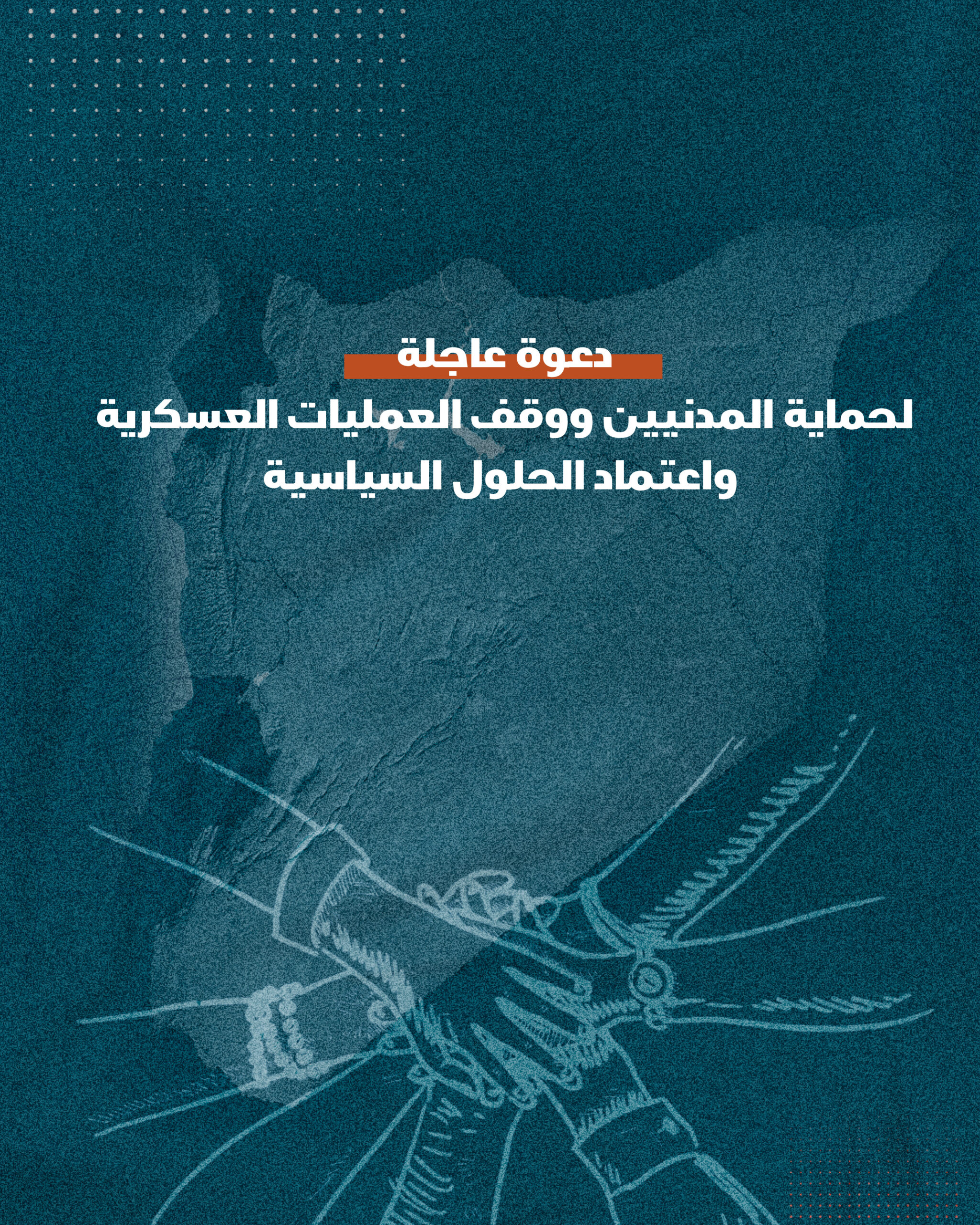
– The dialogue resulted in a set of recommendations addressed to Syrian civil society and the caretaker government.
– Participants unanimously agreed on the necessity of incorporating the dialogue’s recommendations into any national discussions on the future of justice in Syria.

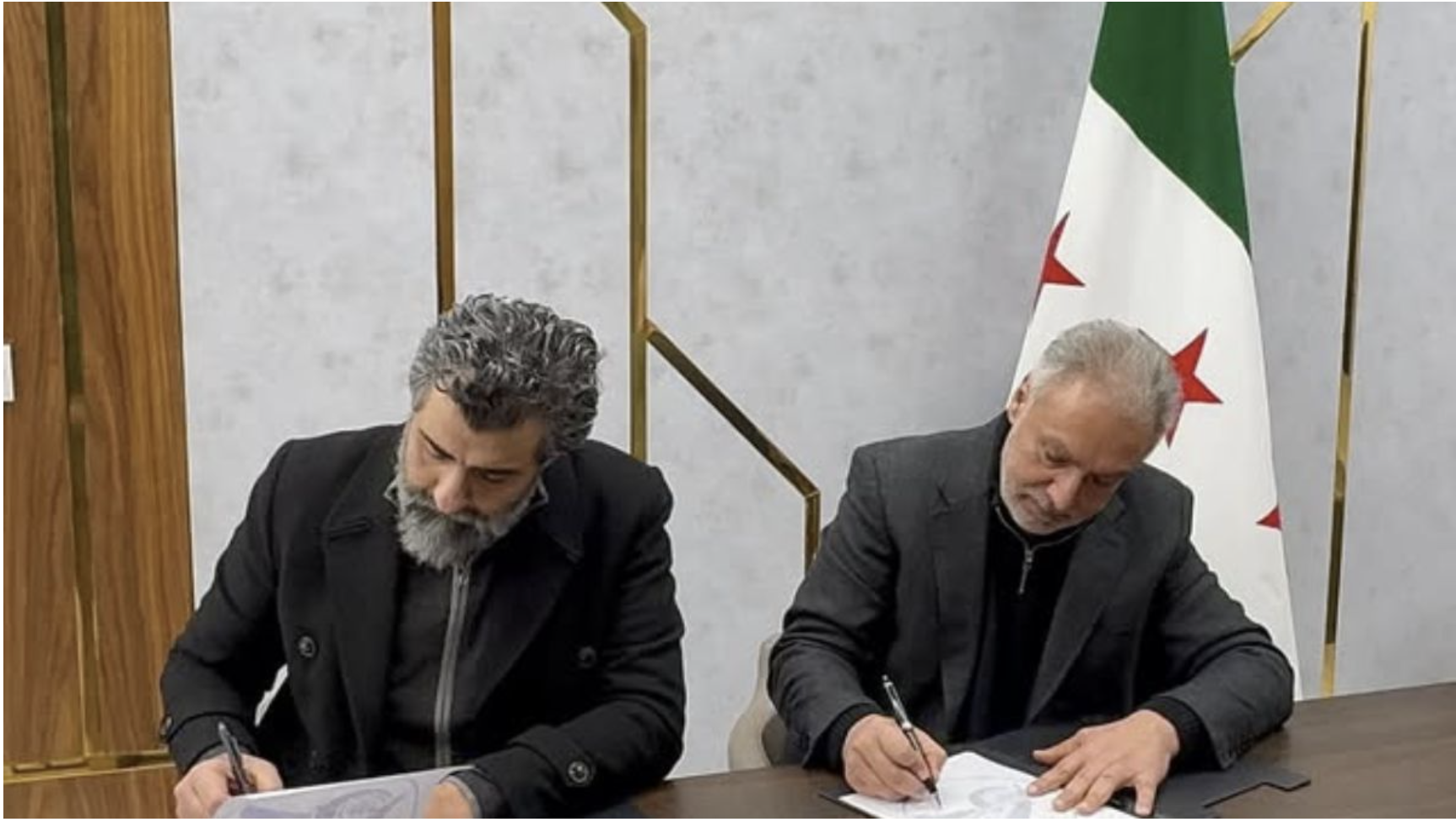
A group of Syrian civil society organizations, survivor groups, and families of victims of various violations in Syria held a historic Syrian dialogue on justice, truth, and fairness, attended by the caretaker government’s Deputy Minister of Justice for Legal Affairs and Studies, Judge Khitam Haddad. The dialogue, which took place in Damascus on January 24–25, reviewed key achievements in justice, truth, and fairness efforts led by participating organizations and groups.

Participants identified opportunities and challenges requiring further work and practical steps to advance justice efforts in Syria after the fall of the tyrannical Assad’s regime, from both a legal-judicial and a societal perspective. They unanimously agreed on the importance of justice and accountability in achieving civil peace and community recovery in Syria.
Through her participation, Deputy Minister of Justice in the caretaker government, Judge Khitam Haddad, emphasized the need to submit the dialogue’s recommendations and outcomes to the Ministry of Justice to benefit from the expertise of the participating organizations, which are essential for critical justice-related files such as transitional justice and enforced disappearances in Syria.

The dialogue’s working groups produced clear and specific recommendations on pressing issues, including: Recognizing and acknowledging the suffering of war crime victims in Syria, protecting documents and mass graves, ensuring security under the rule of law, and guaranteeing that accountability and transitional justice processes remain independent, transparent, and inclusive.

Additionally, mid-term recommendations focused on building a state of institutions committed to citizenship and human rights principles, ensuring: Revealing the fate of forcibly disappeared persons, ending forced displacement and camps, promoting a comprehensive justice approach that includes and centers victims’ participation and perspectives, and leveraging civil society expertise.

Mohammad al-Bakri from the Task Force of Survivors of Chemical Attacks in Syria said:

“The Assad’s regime and its allies have worked tirelessly to deny the truth and silence survivors and witnesses to its crimes, including chemical attacks. Today, we all recognize the importance of documenting these crimes and continuing to push for justice and accountability, ensuring these atrocities never happen again”.

Hasna Issa from Warsheh Team – ‘My Nationality is My Right’ Campaign said:

“For the past five years, Warsheh Team has been working on statelessness issues, and this meeting was a crucial opportunity for us to highlight the plight of children rendered stateless by the war in Syria. Despite being a fundamental human rights issue recognized internationally, it remains completely neglected in Syria. We demand Syrian women’s right to pass nationality to their children and spouses. The absence of this right exacerbates the problem of statelessness and reduces Syrian women to second-class citizens. We look forward to changing these laws in Syria’s future”.

Zilan Ali from Lêlûn Association for Victims said:

“We document violations in Afrin, which is under the control of factions from the Syrian National Army, and we support victims of displacement and enforced disappearance. Our meeting with Syrian organizations was an important opportunity to exchange expertise and strengthen efforts to achieve justice and fairness for all”.

Wafa Mustafa from The Syria Campaign said:

“One of the challenges we faced during the dialogue was our differing priorities and approaches. However, it was also a major opportunity to develop a shared and just vision that reflects the scale of Syria’s catastrophe and the collective efforts for justice. Today, Syria is not fully free as long as bombardment and Israeli expansion continue in the south, and Turkish airstrikes and ongoing battles persist in the northeast. This presents an additional challenge: ensuring that efforts do not focus only on certain regions while neglecting others. Syria’s stability can only be achieved through an inclusive approach that encompasses all its regions and communities”.

Ends

Notes:

The dialogue was held at Cham Hotel in Damascus, with the participation of more than fifty representatives from the attending organizations and groups.

The organizing and participating groups in the dialogue are:

1. General Union of Internees and Detainees
2. Union of Medical Care and Relief Organizations (UOSSM)
3. Badael
4. Syrian Legal Development Programme (SLDP)
5. The Female Survivors Union
6. Tastakel
7. Lêlûn Association for Victims
8. Jawa Voluntary Team
9.Release Me
10. The Syria Campaign
11. The White Helmets
12. Dawlaty
13. Synergy Association for Victims
14. DAR Association for victims of forced displacement
15. Caesar Families Association
16. Adra Detainees Association
17. Association of Detainees and the Missing in Sednaya Prison (ADMSP)
18. Sama
19. Syrians for Truth and Justice
20. Oxygen Shabab
21. Syrian Network for Human Rights
22. Syrian Female Journalists Network
23. Shams Forum
24. Detainees’ Voice – Save the Rest | Documentation Group in Darayya City
25. Families for Truth and Justice
26. Families For Freedom
27. Justice For Life
28. Justice and Sustainable Development
29. Step for Volunteer Work Team
30. Warsheh Team
31. Do Not Suffocate the Truth
32. Bidayetna Initiative
33. Syrian British Consortium
34. Homs Civil Peace Group (Seen)
35. Task Force of Survivors of Chemical Attacks in Syria
36. Lawyers and Doctors for Human Rights
37. Madaniya
38. Syrian Center for Media and Freedom Expression (SCM)
39. Syrian Center for Legal Studies and Researches
40. Syrian Justice and Accountability Center
41. Chemical Violations Documentation Center and Research
42. Justice Paths (Masarat)
43. Arbitrary Detention and Enforced Disappearance Victims Support Project
44. Adalaty Centre
45. Women Now for Development
46. Nophotozone
47. Health Information System Unit
48. The Day After (TDA)

Statement on Refugee Return, On Suspending Asylum Applications of Syrians

January 9, 2025

The following Syrian organizations express serious concern at the irresponsible decision among European countries to freeze Syrian asylum processes.

Less than two days after the fall of the Assad regime in Syria, the UK, many EU countries including Germany and Austria, and Norway, have said they will suspend the processing of asylum applications from Syrians.

Whilst we understand the need to update country guidance relating to asylum claims to respond to these emerging issues, this should not come in parallel with such a freeze. This type of discourse is irresponsible and will leave tens of thousands of families in indefinite turmoil.

Syria is not a safe zone of return. Instability prevails and what the future holds is unclear. Chaos and aggression persist and there is neither a stable authority nor functioning state structures. After five decades of dictatorship, there are not yet effective and accessible legal safeguards for remedy and protection in case of human rights abuses against returnees. Millions of people inside Syria continue to be displaced and there is no sign of achieving the basics of living conditions. Syrians are at a decisive moment where they have the opportunity to build the country and render Syria a safe country. The focus on asylum and not on support of civic space is therefore particularly problematic.

We have yet to see pathways for transitional justice in Syria. Many refugees will not feel safe to return as long as they risk encountering war criminals or individuals who committed atrocities against them. To put those families seeking protection into a situation that would once again put their lives in danger shows a lack of responsibility towards people who have already experienced unimaginable suffering. As the head of the UN’s refugee agency responded to this move saying “Patience and vigilance will be necessary, hoping that developments on the ground will evolve in a positive manner, allowing voluntary, safe and sustainable returns to finally occur – with refugees able to make informed decisions”.

Within this context, the organizations reaffirm:

1. Right to asylum must be upheld and guaranteed: Syrian individuals still maintain their right to seek and enjoy asylum, in accordance with international law. Notwithstanding the changes on the ground, this right must be respected and accessible in relation to new and ongoing asylum applications.
2. Prohibition of constructive refoulement: refugees’ return remains voluntary, and any form of coercion, disguised expulsions or “constructive refoulement” are unlawful under international law and EU law. Suspending the processing of asylum applications may result in coercing Syrians to return to Syria rather than live in uncertainty in Europe, a risk exacerbated in cases of families worried about their children’s future. States do not have the right to utilize disguised, indirect acts, or omissions in order to bring about the same result that it could obtain through the adoption of forced return policies.
3. Retention of refugee status: even in case of voluntary return, a refugee does not immediately lose his or her refugee status. In accordance with international refugee law, until the point at which a refugee becomes re-established in his or her country of origin, legal status as a refugee is retained. This must remain a critical safeguard moving forward.

Signatories
Access Center for Human Rights (ACHR)
Alseeraj Sweden
Baytna pour le soutien de la société civile
Child Guardians
Danish-Syrian Cultural Association
Dozana
Families for Freedom
Finjan
Lawyers and Doctors for Human Rights LDHR
Musawa
Shabaka
SOAS Syrian Society
Syrian Center for Media and Freedom of Expression (SCM)
Syrian Network in Denmark- SND
Syrisk-svenska Demokratiförbundet
The Day After
The Syrian legal Development Programme
The Syria Campaign
The Syrian British Consortium
Verband Deutsch-Syrische Hilfsvereine e.V.
Women Now for Development

The Fall of the Assad Regime

December 13, 2024      |   This post is also available in: Arabic

On 8 December 2024, Syrians woke up to a Syria free from the yoke of the criminal Assad regime. After decades of tyranny that violated every Syrian’s right to life in freedom and in dignity, the Assad family’s 53-year rule has finally come to an end. Congratulations to all! Today is a triumphant day that brings us much hope.

Former dictator Bashar Al-Assad is responsible for the killing of over half a million Syrians since the outbreak of the war. His regime, which is characterized by widespread corruption and sheer brutality, decided to respond to peaceful protests in 2011 and 2012 with bullets, and soon after, bombs. Throughout the conflict, the Assad regime, alongside its allies Russia and Iran, had deployed a whole range of means to kill, besiege, and starve Syrians and punish them for daring to confront his regime, including with chemical weapons and barrel bombs. The regime’s deliberate targeting of civilians and civilian infrastructure, such as hospitals, markets, and residential areas, is well-documented. Over 6 million Syrians were made refugees, and over 7 million internally displaced.

Another defining practice of this police state was its systematic policy of enforced disappearance, arbitrary detention, and industrial-scale torture in its notorious detention facilities. According to SNHR, over 100,000 Syrians have been forcibly disappeared and arbitrarily detained by the regime, many of whom have died in these facilities either as a result of torture or executions. We have been overjoyed to see the release of tens of thousands of forcibly disappeared political prisoners, including women and children, from detention facilities across territory formerly controlled by the ousted regime. At the same time, we stand in solidarity with families of the disappeared, sharing in their pain and suffering caused by the inaction of international bodies in promptly addressing this humanitarian crisis. Immediate and effective responses are imperative, as any further delay risks causing irreparable harm to the right to the truth of families and exacerbates the enduring anguish of not knowing the fate and whereabouts of their loved ones or what has happened to them.

The oppression and violence of the Assad regime did not commence with Bashar, but rather his father, Hafez. In 1982, Hafez Al-Assad killed over 40,000 Syrians in the city of Hama. Hundreds of political prisoners were executed in their prison cells by forces loyal to Hafez’s brother, Rifaat Al-Assad. These legacy-defining massacres shaped much of Syria’s political memory, identity, and history.

Moreover, under the Syrian regime, the intertwining of crony capitalism and the war economy had entrenched economic inequality and reinforced regime power structures. Crony capitalism flourished as the regime rewarded loyalists and insiders with lucrative business opportunities, monopolies, and preferential treatment, creating an elite class deeply tied to the state. The war economy exacerbated these dynamics, as networks of regime-affiliated businessmen and militia leaders profited from wartime smuggling, reconstruction contracts, and control over vital resources like fuel and food supplies. These actors exploited the conflict to accumulate wealth at the expense of ordinary Syrians who faced soaring poverty and the collapse of basic services. This symbiotic relationship between the regime and its cronies was designed to preserve authoritarian control rather than address the needs of the Syrian people.

Our work on promoting human rights and the rule of law in the country has just begun. As the nation seeks to transition to democracy, rebuild institutions, and forge an inclusive society, we will continue to support civil society groups, victims, survivors, families’ associations, humanitarian organizations, businesses, and other entities to ensure respect for the human rights of all groups and the protection of the environment. We will also work to ensure that war criminals and profiteers are not rewarded with contracts for procurement or reconstruction. We will continue to support victims, survivors and families’ associations to fully exercise, access, and fulfill their rights to justice, truth, and remedy – including their right to participate in future truth and justice processes – for the well-documented atrocities committed by members of the Assad regime and their allies, including local and foreign business actors, as well as other parties that have violated the rights of the Syrian people.

We know there are a multitude of challenges that lie ahead, but we are committed and prepared to tackle them. We hope to see the day that all peoples are free from unjust political, economic, and social systems of subjugation and discrimination on the basis of gender, ethnicity, religion, or any other grounds.

A Joint Statement by Syrian Civil Society Organizations and Victims’ Associations Welcoming the Paris Criminal Court’s Ruling to Sentence Three High-Ranking Syrian Security Officials to Life Imprisonment in the Dabbagh Case

June 5, 2024    |                         |   Download as PDF    |   This post is also available in: Arabic

Paris, 6 June 2024 – On May 24, 2024, the Paris Criminal Court issued a life imprisonment sentence against three high-ranking Syrian security officials close to Bashar al-Assad: Major General Ali Mamlouk, Major General Jamil al-Hassan, and Brigadier General Abdel Salam Mahmoud. They were convicted of complicity in committing crimes against humanity and war crimes against the Syrian-French nationals Mazzen and Patrick Dabbagh.

This ruling came after four days of hearing testimonies from experts and survivors from the Investigation Branch of the Air Force Intelligence Department detention center at Mezzeh Airport. The evidence presented over eight years proved the responsibility of these officials for the crimes. Mazzen and Patrick were detained and forcibly disappeared in 2013. Death certificates were issued for them by the Syrian government in 2018, after they were killed as a result of torture and ill-treatment.

This trial is the first of its kind in France, holding high-level Syrian officials accountable for their crimes.

We, the undersigned Syrian civil society organizations and victims and survivors’ associations, welcome this ruling. It represents an important step on the path to justice and reaffirms the ongoing efforts to combat impunity until all perpetrators of violations in Syria are held accountable and the victims are given justice and adequate compensation.

We also extend our sincere thanks for the courage and determination shown by the witnesses and the Dabbagh family in reaching this ruling. We eagerly anticipate the day when Syrian men and women can seek justice in their own courts, for we believe that true justice is the foundation of the peace and stability we all aspire to achieve.

Signatories:
1. Access Center for Human Rights (ACHR)
2. Alsharq News
3. Amal Healing and Advocacy Center
4. Assyrian Society for Helping and Development
5. Badael
6. Baytna pour le soutien de la société civile
7. Caesar Families Association
8. chemical violations documentation center and research
9. Deirna Organization
10. Family of Truth and Justice
11. Fraternity foundation for Human Rights-FFHR
12. Free Syrian lawyers Association -FSLA
13. Global Organization for Civil Society (GLOCA)
14. Humanitarian care charity
15. Justice for peace
16. LACU
17. LACU
18. Lawyers and Doctors for Human Rights LDHR
19. Local Development and Small-Projects Support (LDSPS)
20. Local Development Organization
21. MAHABAD ORGANIZATION FOR HUMAN RIGHTS MOHR
22. Mizan organisation for Legal Research and Human Rights
23. MPFG
24. Multifaith Alliance
25. Musawa
26. Observatory of Political and Economic Networks
27. Office of the Wounded and Missing Persons Affairs
28. Pro-justice
29. PÊL- Civil Waves
30. SADAD Humanitarian Organization
31. SOBH CULTURAL TEAM
32. Synergy Association for Victims
33. syria spring team
34. Syrian Archive
35. Syrian British Consortium
36. Syrian center for legal studies and research
37. Syrian Center for Policy Research
38. Syrian Community Romania
39. Syrian Forum
40. Syrian Network for Human Rights – SNHR
41. Syrians for Truth and Justice
42. The Syrian Legal Development Programme
43. The White Helmets
44. Together For Algarniya
45. union of free syrian students
46. Union of Revolutionary Bureaus
47. We Dared to Dream “Action for Sama”
48. Women Now for Development
49. Zoom in Association

(العربية) مذكرة التوقيف الفرنسية: فرصة لإعادة النظر في الحصانة الشخصية لرؤساء الدول

Sorry, this entry is only available in العربية.

Statement Demanding the Establishment of an Exceptional Chemical Weapons Tribunal

Nov 30, 2023    |                     |   Download as PDF    |   This post is also available in: Arabic

We, a group of Syrian human rights, humanitarian and civil society organisations, associations and groups of victims and their families, and witnesses and survivors of chemical attacks in Syria.

Stemming from:

1. Having been directly exposed to deadly weapons that cause severe and long-term damage and suffering and dealing with their consequences on the ground and in international fora. We have responded, documented, advocated, litigated, and supported healing in possible cases;

2. Our belief that the continued impunity for chemical attacks undermines the absolute prohibition of chemical weapons and the deterrent effect of accountability. This increases the likelihood of future use, and destabilizes the international system and trust in the international organisations established to protect international peace and security.

And based on:

3. The prohibition of the use of chemical weapons under customary international law and international conventions;

4. The unprecedented and repeated violations of this universal norm in the Syrian conflict;

5. The accumulation of incontrovertible evidence collected by the Organization for the Prohibition of Chemical Weapons (OPCW) indicating the responsibility of the Syrian authorities for nine attacks and the Islamic State of Iraq and ash-Sham for two attacks;

6. The existence of the International, Impartial and Independent Mechanism established by the international community to collect and build on such evidence, in the absence of the jurisdiction of any international criminal court that can adjudicate the matter;

7. The inability of the International Criminal Court to rule on this flagrant violation of international law because Syria is not a signatory to the law establishing the Court, and the attempt made by the United Nations Security Council to refer the case to the ICC having been vetoed in 2014;

8. The ability of states within their sovereign rights to collectively hold to account perpetrators, and the existence of relevant international conventions that support and encourage this;

9. The rigor of international resolutions from the United Nations Security Council and the United Nations General Assembly in the context of holding all individuals, entities and governments accountable for the use of chemical weapons, especially United Nations Security Council resolutions 2118, 2209, 2235, 2314, 2319 and General Assembly resolutions 68/182 (2013), 70/41 (2015), 71/69 (2016), 72/43 (2017), 182/73 (2018), 40/74 (2019), 169/74 (2019), 228/76 (2021).

Having since the first use of chemical weapons in Syria, as groups collectively and individually, taken the following steps:

10. Advocated towards holding all individuals or parties accountable for the use of chemical weapons;

11. Despite the legal, administrative and psychological difficulties experienced by the victims of chemical attacks, put intensive efforts into domestic courts using the principle of universal jurisdiction or other local laws that support the fight against impunity for war crimes and crimes against humanity, in countries hosting Syrian refugees, including those who have survived chemical attacks, one of which led to the issuance of arrest warrants for Syrian President Bashar al-Assad, his brother Maher and two other senior officers before the French courts, which is an historical judicial precedent that deserves praise for the efforts and courage of victims and witnesses;

12. Initiated in-depth studies and discussions on what can be done to address the impunity gap at the international level, and advanced legal solutions that seek to overcome this situation;

13. Drafted a proposal for the establishment of an international tribunal, with the aim of realizing criminal accountability for established cases of chemical weapons use, which are not able to be tried by the ICC – a circumstance which applies to the Syrian case;

14. Conducted intensive consultations at the level of legal experts, government representatives at technical and political levels, and with relevant international institutions on this proposal to ensure supportive legal and policy grounds.

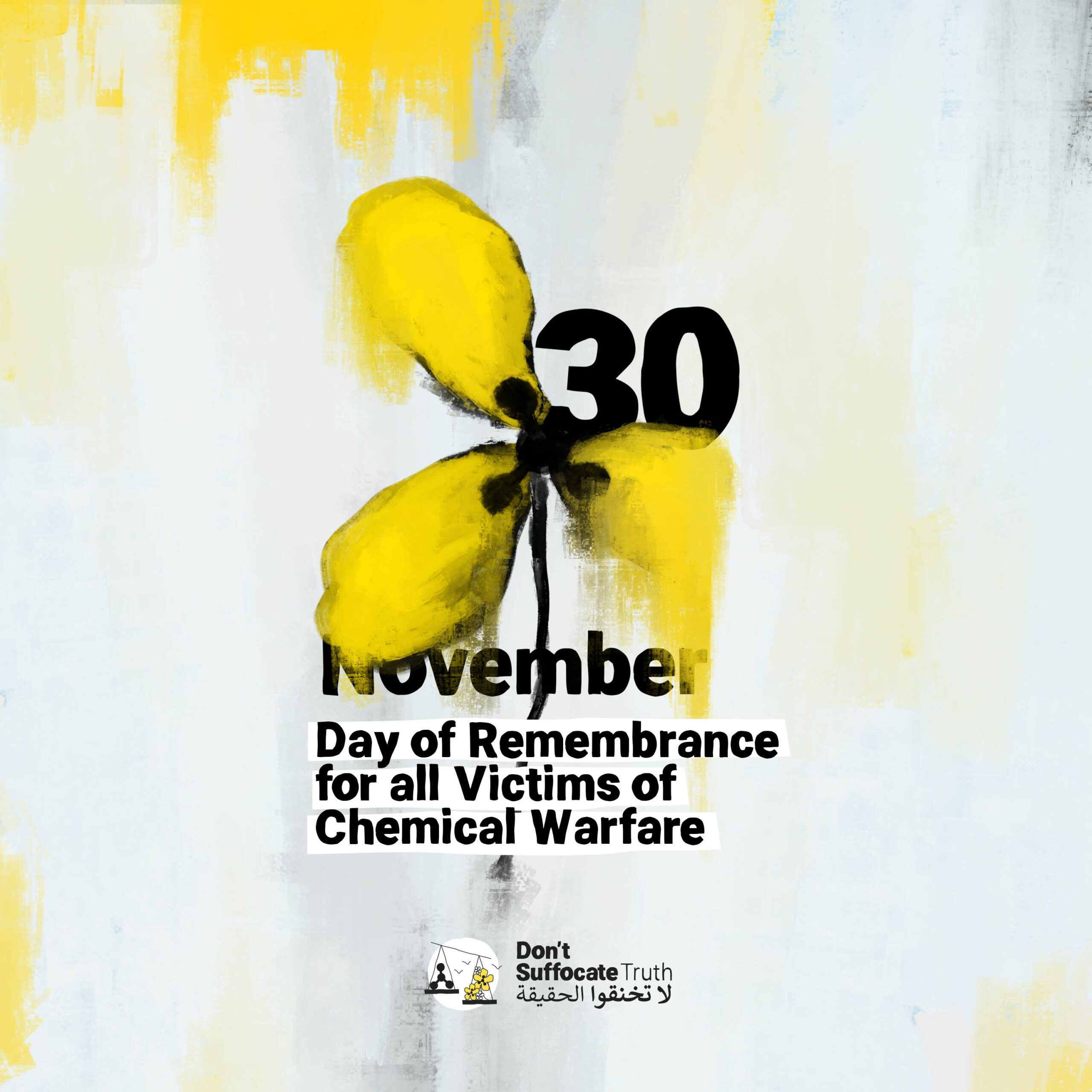
Based on the above, we come together on 30 November, the International Day of Remembrance of all Victims of Chemical Warfare:

To call on states to establish an Exceptional Chemical Weapons Tribunal for internationally prosecuting the use of chemical weapons where there is no recourse to existing judicial criminal fora, as in Syria.

For details visit:www.cwtribunal.org

The Syrian Civil Society Conference on Chemical Weapons

Nov 24, 2023    |                      |   Download as PDF    |   This post is also available in: Arabic

CONFERENCE STATEMENT

November 23, 2023

Since the Syrian Arab Republic, represented by the Regime, ratified the Chemical Weapons Convention (CWC) a decade ago, Syria has witnessed a series of abhorrent violations of the CWC. Since September 2013, more than 217 attacks using toxic gasses have been documented in Syria.1 Simultaneously, the regime has continued to develop chemical arsenals in Syria, in a flagrant violation of UN Security Council Resolution 2118 and a clear and fundamental violation of the CWC.

In light of the persistence of chemical weapon attacks, we, the Syrian civil society organizations, have borne the burden and toll of responding to the attacks in a context characterized by a lack of specialized expertise and equipment, and pre-existing vulnerabilities and a lack of infrastructure due to the impact of the war. In addition, the Syrian regime’s systematic siege on several cities, such as Eastern and Western Ghouta and the city of Aleppo, severely hampered organizations’ ability to respond to the attacks that occurred there.

Despite all this, over the past ten years, Syrian civil society organizations and survivors and victims groups played an essential role in cooperating with the various international investigative and documentation teams that investigated chemical attacks in Syria. We greatly appreciate the efforts of the OPCW investigation teams over the past ten years, despite the obstacles they have faced. We also strongly condemn the Syrian regime’s continued use of toxic gasses, development of the chemical arsenal, and obstruction of the work of international investigative teams including attempts to mislead investigators and prevent their access to targeted sites. The regime’s strategy also involved intimidating witnesses, destroying evidence and obscuring facts. The Regime also continues to shelter behind Russia’s continued diplomatic efforts to obstruct the course of justice, including a campaign to undermine the credibility of the OPCW and the investigative reports issued by its various teams.

As witnesses, survivors, families of victims and first responders, we have faced many challenges including disinformation and propaganda campaigns by the Syrian regime and its Russian ally, with the aim of undermining the truth and preventing witnesses and survivors from testifying, as well as the direct targeting of witnesses and victims’ families through systematic enforced disappearance, arbitrary detention, and threats of violence or death. Some of these practices were clearly mentioned in the third report of the OPCW Investigation and Identification Team (IIT) concerning the Douma attack issued in January 2023.

Therefore, we reiterate our determination to exert all possible efforts to support investigations into the use of chemical weapons in Syria, and call to expand the investigative teams’ mandate and mechanisms to include the investigation of chemical attacks in additional locations throughout Syria. We also welcome the efforts made by the judicial bodies of several European countries to address individual cases of the use of chemical weapons through universal jurisdiction, and we call on the OPCW Member States to take the necessary measures to provide protection and support to witnesses, survivors, families of victims and Syrian civil society organizations, who play an important role in the response and documentation of these attacks.

We also stress that the only guarantee for a complete end to these violations and to prevent their recurrence around the world is to take joint and collective steps to hold accountable all parties that contributed both directly and indirectly to the ongoing violations of the Chemical Weapons Convention and other relevant international resolutions. As such, we call on OPCW Member States to take comprehensive, joint measures, in accordance with Article 12 of the CWC, to establish an international mechanism which can deliver justice for victims and their families and hold accountable all parties involved in the use of chemical weapons against civilians, and to end impunity for the use of chemical weapons.

The undersigned organizations stress the following:

1. States Parties should prioritize addressing the use of chemical weapons in Syria within UN and OPCW- related activities: lack of progress and compliance with OPCW Declaration from the Syrian authorities warrants further and increased scrutiny and accountability

The continued impunity for the use of chemical weapons in Syria and the lack of compliance of the Syrian government with its initial OPCW Declaration is a threat to the stability of any future peace for Syrians amidst Syria’s frozen conflict and undermines the international norms prohibiting their use. The lack of progress in addressing outstanding issues of the initial OPCW Declaration by the Syrian government and ongoing concealment of the truth warrants further and increased scrutiny, not the other way around.

2. State Parties should increase support for Syrian civil society’s documentation, accountability-driven activities and first response capacity, in a sustainable and long-term manner

Ten years since the first chemical attack in Syria, UN-affiliated and OPCW-established bodies have made important efforts to investigate violations of the Chemical Weapons Convention. These results relied heavily on efforts of Syrian civil society organizations, who have played an essential role in documenting multiple chemical attacks, collecting evidence and cooperating extensively with existing investigative processes. Over the past decade, Syrian humanitarian and medical CSOs have also invested in organizational readiness to respond to chemical attacks, despite the very difficult conditions.

3. State Parties should render illegitimate the Syrian authorities’ narrative on the use of chemical weapons in Syria, and take adequate actions to ensure this narrative is not perpetuated at the expense of survivors and victims

Although there is a trove of evidence of chemical weapons use, ongoing misinformation and denial campaigns have managed to distort the facts, endanger people’s lives and cause new, compounded suffering to the victims, amounting to a form of inhuman, degrading or cruel treatment. State Parties should refuse to give further space and attention to these revisionist attempts and take action to condemn denial and disinformation given its impact on victims and survivors. Most importantly, they should support ongoing and future efforts aimed at acknowledging and recognizing victims and survivors’ experiences and truth.

4. States Parties should ensure the full implementation of UNSC Resolution 2118 of 2013

Deeply outraged by the use of chemical weapons in Damascus in August 2013, the UNSC endorsed the expeditious destruction of Syria’s chemical weapons programme, calling for accountability for perpetrators of these atrocious crimes. Instead of leading to the end of the use of chemical weapons, the resolution resulted being only one of (too) many resolutions condemning the use of chemical weapons in Syria. After a decade from the first use of chemical weapons in Syria, time is due for serious state parties to take all actions needed to deliver on the 2118 UNSC Resolution, and the many UNSC and UNGA resolutions that the International Community have adopted calling for accountability for the use of chemical weapons, in accordance with the UN Charter.

5. In accordance with Article 12(3) of the Convention on Chemical Weapons, State Parties should take collective measures in response to the use of chemical weapons in Syria through the Conference of State Parties

Through the use of chemical weapons in Syria, the Syrian government has committed activities prohibited under the Chemical Weapons Convention. Ongoing impunity results in serious damage to the object and purpose of the Convention, originally intended to enforce the absolute prohibition of the use of Chemical Weapons and accountability for acts or omissions resulting in violations of the Convention. To avoid any further irreparable damage to the purpose of the Convention, State Parties should enforce Article 12(3) and undertake collective measures, in conformity with States’ obligations under international law.

6. State Parties should enforce the international arrest warrants issued by France for Bashar al-Assad, Maher al-Assad, and military generals Ghassan Abbas and Bassam al-Hassan over the use of banned chemical weapons

On November 15th, French criminal investigative judges issued arrest warrants for President Bashar al-Assad, his brother Maher al-Assad, and two other senior officials over the use of chemical weapons against civilians in Eastern Ghouta, in August 2013. The arrest warrants refer to the legal qualifications of complicity in crimes against humanity and war crimes. State Parties should enforce the arrest warrants in accordance with the obligation to prosecute or extradite in accordance with Customary International Law in relation to alleged crimes against humanity.

7. In light of relevant UNSC and GA resolutions calling for accountability, and within the rights and obligations inherent in their Statehood and international instruments, States should collectively take active steps to ensure the international prosecution of all individuals responsible for the use of Chemical Weapons in Syria, and beyond.

Syrian civil society has relentlessly dedicated efforts to hold all individual perpetrators for use of chemical weapons in Syria. However, the need for justice of victims and survivors is greater than the capacity of existing mechanisms. There is the need for an international tool to hold all individuals accountable as confirmed by findings of the OPCW. Syrian civil society calls for collective multilateral efforts in which States, seriously committed to protecting the norm of absolute prohibition for the use of chemical weapons, find ways to prosecute the use of CW at the international level.


(1) Accountability Remains Absent on the Sixth Anniversary of the Worlds Largest Chemical Weapons Attack
Since The Chemical Weapons Convention, The Syrian Network for Human Rights, August 21, 2019, https://snhr.org/wpcontent/pdf/english/Accounting_remains_absent_on_the_sixth_anniversary_of_the_worlds_largest_chemical
_weapons_attack_after_the_Chemical_Weapons_Convention_en.pdf
)

Members of Syrian civil society engage high level officials, including President Volodymyr Zelensky, as well as key Ukrainian stakeholders, in Kyiv, to commemorate the 10th Anniversary of the Chemical Weapon attacks on Ghouta.

Aug 25, 2023    |                       |   Download as PDF   |   This post is also available in: Arabic

On the 10th anniversary of the 2013 chemical attacks on Ghouta in Syria, and in calling for accountability for ongoing war crimes in Ukraine emboldened by the impunity for past and ongoing crimes in Syria, a group of Syrian civil society representatives visited Kyiv for a series of high-level official meetings and discussions with civil society leaders that concluded with an engagement at the Third Summit of the Crimea Platform with Ukrainian President Volodymyr Zelensky.

Members of the delegation:
• Attended the Third Summit of the Crimea Platform, where representatives of states from across the world, including heads of states, delivered messages of solidarity with Ukraine. Members of the delegation engaged with President Zelensky at the Summit, delivering a message of solidarity for the fight against
impunity in Ukraine and Syria. They affirmed that the free people of Syria stand against crimes committed in Ukraine and stand with its people, contrary to the Syrian regime’s support to Russia. The delegation presented President Zelensky with two gifts. The first symbolises forced displacement and the use of
chemical weapons in Syria using the colors of Ukrainian flag, which was hand made in Syria by artist and chemical weapons survivor, Akram Abo Alfoz. The second is a helmet of a fallen volunteer from the White Helmets who was killed in Syria, representing the sacrifice of Syrian heroes in the face of war crimes
committed by the Syrian regime in its Russian allies.

• Had an official meeting with Prosecutor General, Andriy Kostin, and his team responsible for different war crimes, international collaboration, and victims. Mr Kostin delivered strong messages of solidarity and recognition of the chemical attack. All members of the Syrian delegation shared their messages with Mr Kostin, expressing unwavering solidarity with Ukraine’s fight against impunity for crimes committed by Russia, by showcasing Russia’s propensity to commit such crimes as a policy using its actions in Syria as damning evidence. Technical and advocacy collaboration methods were discussed. The delegation presented Mr Kostin with a symbolic gift from Syria.

• Met with Tamila Tasheva, Permanent Representative of the President of Ukraine in the Autonomous Republic of Crimea, Ukraine, and Maria Tomak, the Head of the Crimea Platform Department. The meeting reasserted the solidarity between the two people and the call for freedom from authoritarian regimes.

• Met with Oleksandra Matviichuk,head of the 2022 Nobel Laureate Center for Civil Liberties. The delegation discussed efforts of civil society organisation in pursuing justice and accountability for both countries.

• Visited the large graveyard in the church of Bucha and met with the Father Andriy. The delegation paid tribute for the victims of the massacre that was committed by the Russian army in Bucha which led to the killing of around 458 civilians in February 2022. Father Andriy expressed his gratitude for the visit, recalling that Syrians know well what Ukrainians are going through.

• Visited the relocated Mariupol hospital in Kyiv. The doctors of this hospital miraculously escaped the occupation in Mariupol which had experienced the systematic attacks by Russian air and land forces. As kind of resistance this hospital was re-established in Kyiv to until they will be able to go back home. Doctors and members of the Syrian delegation who were subjected to the same Russian policy, and who advocate against the bombing of hospitals, stood with them side by side.

• Had a heartfelt exchange with families of forcibly disappeared persons and political prisoners kidnapped and detained by Russia. During which, personal experiences and learned lessons from Syria and Ukraine were shared as a basis for a joint solidarity campaign demanding justice for all political detainees around the world.

• Met with leading and award-winning Ukrainian Journalist Nataliya Gumenyuk from The Reckoning Project and Public Interest Journalist Lab. Ms Gumenyuk previously covered the Arab Spring, including the fall of Aleppo. The delegation exchanged views on building public solidarity between Syrians and Ukrainians. The delegation presented Ms Gumenyuk with a token of appreciation from Syria for her efforts in supporting the trip.

• Visited the Independence Square of Kyiv, which was a key location for Ukrainian’s resistance against past authoritarian regimes. The delegation renewed its commitment to continue the fight towards a democratic Syria, premised on the rule of law and human rights.

Raed Al Saleh, the head of the White Helmets, said: “Since its intervention in Syria to support the Assad regime, Russia has continued to violate the rules of international humanitarian law, targeting infrastructure and humanitarian workers, employing a policy of collective punishment, destroying and besieging cities, and pursuing a policy of disinformation. These brutal tactics are now being applied in Ukraine. Justice must be pursued with such insistent and unwavering determination that no dictator or nation believes they can escape consequences for committing atrocities and abuses without accountability.”

Taher Hijazi, a human rights defender and recipient of the Marianne award for human rights who survived and documented chemical attacks in Syria said: “Ten years ago, I was responding to and documenting the evidence of the Russian-supported chemical attack in Ghouta. Today, I am here to back the foremost efforts of our Ukrainian colleagues in holding Russia accountable for its continuous war crimes.”

Waad AlKateab, an award-winning Syrian film maker, said: “I’ve been documenting attacks on hospitals and health workers, which has been a Russian military strategy in Syria to destroy the resilience of the entire community; and the same strategy is being repeatedly used in Ukraine. We are here to prove that they have not won in breaking our will, and they won’t. We are here to keep fighting for justice and accountability”.

Fadel Abdlhgani, the head of the Syrian Human Rights Network, said: “In this visit, I handed a list of more than seven thousand of Syrian victims killed by Russian military. We are here to honour them and all Ukrainian victims through our support to the Ukrainians in their accountability efforts against Russia war crimes. Holding perpetrators accountable requires us to join efforts for justice.”

Afraa Hashem, campaigner at The Syria Campaign and a displaced activist from eastern Aleppo, said: “I am a human rights defender who was forcibly displaced with my 3 kids by the Syrian regime and its Russian allies. This crime, which I will never overcome its consequences, was presented by Russia as a process of humanitarian evacuation, when in fact it was one of their war tactics to control my city. I am here to support the Ukrainian families in their fight to reach justice and live safely in their homes.”

The visit was Syrian initiated, led, and funded. It was organised by Madaniya and the Syrian British Consortium at the initiative of Syrian British lawyer Ibrahim Olabi. It was made possible with the support of the White Helmets, the Syrian Network for Human Rights, the Syrian Legal Development Programme, the American Coalition for Syria, the Syria Campaign, the Syrian British Medical Society, Action for Sama, the Association of Victims of Chemical Weapons in Syria, and Don’t Suffocate the Truth Campaign. It was facilitated by kind support of the Office of the Prosecutor General Official Protocol in Ukraine and with the assistance of The Reckoning Project: Ukraine Testifies.

LIST OF DELEGATION

• Abdulkarim Ekzayez: Health system and health security specialist at King’s College London. He is the general secretary of the Syrian British Medical Society and the deputy chair of the Syrian Public Health Network. He established some of the first field hospitals in northern Syria where he witnessed attacks on hospitals.

• Afraa Hashim: Activist and human rights defender. Campaigner with the Rights group, The Syria Campaign, and a board member of Don’t Suffocate the Truth; an advocacy campaign for combating the denial of chemical attacks in Syria.

• Amneh Khoulani: Human rights defender, vice chair of Madaniya and co-founder of Families for Freedom. She is a recipient of International Women of Courage Award by the US Secretary of State.

• Fadel Abdulghani: Chair of the Syrian Network of Human Rights (SNHR). SNHR’s documentation is referenced in many state’s country reports and rigorously documented Russian abuses in Syria.

• Haytham Alhamwi: Chair of the Syrian British Consortium; a UK-based award-winning Syrian-led group advocating for democracy and accountability, including in relation to Russian war crimes in Syria. The SBC engages regularly with head of states and foreign ministers.

• Ibrahim Olabi (Head of Delegation): Chair of the Syrian Legal Development Programme and a board member of Madaniya and the Syrian British Consortium. He is the Chief Legal Counsel of The Reckoning Project: Ukraine Testifies, and a Barrister at Guernica 37.

• Mazen Gharibah: Executive Director of the award-winning Syrian British Consortium. He is a researcher at London School of Economics and a member of the UN-backed Syrian Constitutional Committee representing the civil society.

• Raed Al-Saleh: Head of the Syria Civil Defense (The White Helmets); A humanitarian organisation dedicated to helping communities in Syria, with more than 3,000 volunteers working to rescue civilians, provide essential services, help civilians settle down, and seek justice for them.

• Salim Namour: Forcibly displaced surgeon from Ghouta, and a survivor and documenter of its chemical attacks. He is the chief of the Association of Victims of Chemical Weapons in Syria. He was also the founder of the Cave Hospital and the Health Directorate in Ghouta.

• Sawsan Abou Zainedin: Chief Executive Officer of Madaniya; an umbrella of over 200 Syrian civil society organisations working across all sectors and geographies, inside Syria and in diaspora. Madaniya is aimed at enhancing the political agency of the Syrian civic space.

• Taher Hijazi: An award-winning human rights defender who received the Marianne award for human rights. He survived and documented the sarin gas attacks in 2013 and chlorine gas attacks in 2018 on Ghouta and co-founded the Association of Victims of Chemical Weapons in Syria.

• Waad AlKateab, A Syrian activist and filmmaker. Her first documentary, For Sama, received worldwide critical acclaim, winning numerous awards, including best Documentary at the BAFTAs and an OSCAR nomination at the 2020 Academy Awards. She was listed in the 2020 Time100 List of Most Influential People.

• Zaki Lababidi M.D., Chair of Foreign Affairs at the Syrian American Council; the largest Syrian American grassroots organisation in the U.S. and a board member of the American Coalition for Syria. Dr. Lababidi leads the organisation’s relations with regional partners and counterparts.

No Justice for Torture in Syria: A Victim Rights-Based Analysis of the 2022 Anti-Torture Law

Nov 2, 2023    |                           |   Download as PDF    |   This post is also available in: Arabic

Produced by the International Law Support Unit of The Syrian Legal Development Programme (SLDP) and the Syria Regional Desk of The Diakonia International Humanitarian Law Centre

Published On October 17, 2023

In January 2022, the Koblenz Higher Regional Court held that the Syrian authorities have systematically perpetrated torture and cruel, inhuman, or degrading treatment or punishment (ill-treatment) in detention centres.(1) Since the uprising in 2011 and the subsequent armed conflict, the Independent International Commission of Inquiry on the Syrian Arabic Republic (COI) has extensively documented the use of torture by the Syrian authorities, particularly the intelligence and security agencies, against civilians, including political opponents and human rights defenders. The COI has also documented the use of torture and ill-treatment by non-State armed groups (NSAGs), such as the Free Syrian Army, the Syrian National Syrian Army, the Syrian Democratic Forces, Hay’at Tahrir al-Sham, and the Islamic State of Iraq and the Levant.
State agents responsible have persistently evaded justice, benefiting from structural and legislative obstacles to impartial and independent investigations that have institutionalised impunity. Acts of torture and ill-treatment by NSAGs have also not been investigated or prosecuted. This violates the State’s obligation to investigate allegations of serious violations of International Human Rights Law (IHRL) and International Humanitarian Law (IHL), to prosecute suspected perpetrators, and to provide effective remedies for victims. Consequently, victims and survivors of torture and ill-treatment have been abandoned with no access to remedy, reparations, or recognition of their harm and experiences.
The Syrian authorities have consistently denied allegations of torture and ill-treatment, claiming that detainees are treated humanely and that torture is a crime adequately punishable by law. The Syrian authorities have also alleged that the Convention against Torture (CAT) is part of its domestic legislation and takes precedence over national laws in case of conflict. Yet, despite the Syrian authorities’ claim that domestic laws were already adequate to criminalise torture, they enacted the Anti-Torture Law of 29 March 2022 (hereinafter anti-torture law). While the new law imposes stricter penalties and could be seen as a positive step towards comprehensively criminalising torture in Syria, it cannot be read in isolation from other laws in force, particularly those granting immunity to State agents.
This paper analyses the Syrian authorities’ failure to fulfil its obligations under international law despite the adoption of the new anti-torture law. The paper argues that the new anti-torture law fails to:
– ensure the absolute prohibition of torture and other cruel, inhuman, or degrading treatment or punishment as required by IHRL, IHL, and Syria’s obligations under the CAT.
– explicitly criminalise cruel, inhuman, or degrading treatment or punishment as stipulated by the CAT, therefore obstructing the recognition of victims of ill-treatment as such before the law and their subsequent access to remedy and justice.
– address enforced disappearance as a form of torture, therefore failing to recognise the specific impact of enforced disappearance on Syrian families and provide redress to victims of enforced disappearance and their families.
– end the impunity enjoyed by members of the Syrian Military and its Intelligence, Internal Security Forces, and the General Intelligence Directorate, therefore violating victims’ right to an investigation and access to judicial remedy.
– provide full and effective redress and reparation for torture victims, including restitution, compensation, rehabilitation, satisfaction and right to the truth, and guarantees of non-repetition.
This paper argues that victims of torture and ill-treatment in Syria will continue to face significant obstacles in pursuing justice and redress in spite of the new anti-torture law. The question of the retroactive application of the law to past allegations of torture raises concerns about shielding perpetrators with further immunity as well as about the adequacy of the law itself to prosecute for those crimes and to redress the victims. Furthermore, the imposition of stricter penalties alone is insufficient to address the systematic use of torture in Syria. More comprehensive measures are needed to address past violations, tackle the root causes of torture, hold perpetrators accountable, provide redress and reparation to victims, and guarantee non-repetition. The new anti-torture law fails to address these critical issues, treating torture as an exception rather than a widespread and systematic policy in Syria.


(1) Koblenz Higher Regional Court, Life imprisonment due to crimes committed against humanity and murder – sentencing of a suspected member of the Syrian secret service (17 January 2022) (Available at:
https://olgko.justiz.rlp.de/presse-aktuelles/detail/life-imprisonment-due-to-crimes-committed-against-humanity-and-murder-sentencing-of-a-suspected-member-of-the-syrian-secret-service).

Members of Syrian civil society engage high level officials, including President Volodymyr Zelensky, as well as key Ukrainian stakeholders, in Kyiv, to commemorate the 10th Anniversary of the Chemical Weapon attacks on Ghouta.

Aug 25, 2023    |   [jp_post_view]   |   Download as PDF   |   This post is also available in: Arabic

On the 10th anniversary of the 2013 chemical attacks on Ghouta in Syria, and in calling for accountability for ongoing war crimes in Ukraine emboldened by the impunity for past and ongoing crimes in Syria, a group of Syrian civil society representatives visited Kyiv for a series of high-level official meetings and discussions with civil society leaders that concluded with an engagement at the Third Summit of the Crimea Platform with Ukrainian President Volodymyr Zelensky.

Members of the delegation:
• Attended the Third Summit of the Crimea Platform, where representatives of states from across the world, including heads of states, delivered messages of solidarity with Ukraine. Members of the delegation engaged with President Zelensky at the Summit, delivering a message of solidarity for the fight against
impunity in Ukraine and Syria. They affirmed that the free people of Syria stand against crimes committed in Ukraine and stand with its people, contrary to the Syrian regime’s support to Russia. The delegation presented President Zelensky with two gifts. The first symbolises forced displacement and the use of
chemical weapons in Syria using the colors of Ukrainian flag, which was hand made in Syria by artist and chemical weapons survivor, Akram Abo Alfoz. The second is a helmet of a fallen volunteer from the White Helmets who was killed in Syria, representing the sacrifice of Syrian heroes in the face of war crimes
committed by the Syrian regime in its Russian allies.

• Had an official meeting with Prosecutor General, Andriy Kostin, and his team responsible for different war crimes, international collaboration, and victims. Mr Kostin delivered strong messages of solidarity and recognition of the chemical attack. All members of the Syrian delegation shared their messages with Mr Kostin, expressing unwavering solidarity with Ukraine’s fight against impunity for crimes committed by Russia, by showcasing Russia’s propensity to commit such crimes as a policy using its actions in Syria as damning evidence. Technical and advocacy collaboration methods were discussed. The delegation presented Mr Kostin with a symbolic gift from Syria.

• Met with Tamila Tasheva, Permanent Representative of the President of Ukraine in the Autonomous Republic of Crimea, Ukraine, and Maria Tomak, the Head of the Crimea Platform Department. The meeting reasserted the solidarity between the two people and the call for freedom from authoritarian regimes.

• Met with Oleksandra Matviichuk,head of the 2022 Nobel Laureate Center for Civil Liberties. The delegation discussed efforts of civil society organisation in pursuing justice and accountability for both countries.

• Visited the large graveyard in the church of Bucha and met with the Father Andriy. The delegation paid tribute for the victims of the massacre that was committed by the Russian army in Bucha which led to the killing of around 458 civilians in February 2022. Father Andriy expressed his gratitude for the visit, recalling that Syrians know well what Ukrainians are going through.

• Visited the relocated Mariupol hospital in Kyiv. The doctors of this hospital miraculously escaped the occupation in Mariupol which had experienced the systematic attacks by Russian air and land forces. As kind of resistance this hospital was re-established in Kyiv to until they will be able to go back home. Doctors and members of the Syrian delegation who were subjected to the same Russian policy, and who advocate against the bombing of hospitals, stood with them side by side.

• Had a heartfelt exchange with families of forcibly disappeared persons and political prisoners kidnapped and detained by Russia. During which, personal experiences and learned lessons from Syria and Ukraine were shared as a basis for a joint solidarity campaign demanding justice for all political detainees around the world.

• Met with leading and award-winning Ukrainian Journalist Nataliya Gumenyuk from The Reckoning Project and Public Interest Journalist Lab. Ms Gumenyuk previously covered the Arab Spring, including the fall of Aleppo. The delegation exchanged views on building public solidarity between Syrians and Ukrainians. The delegation presented Ms Gumenyuk with a token of appreciation from Syria for her efforts in supporting the trip.

• Visited the Independence Square of Kyiv, which was a key location for Ukrainian’s resistance against past authoritarian regimes. The delegation renewed its commitment to continue the fight towards a democratic Syria, premised on the rule of law and human rights.

Raed Al Saleh, the head of the White Helmets, said: “Since its intervention in Syria to support the Assad regime, Russia has continued to violate the rules of international humanitarian law, targeting infrastructure and humanitarian workers, employing a policy of collective punishment, destroying and besieging cities, and pursuing a policy of disinformation. These brutal tactics are now being applied in Ukraine. Justice must be pursued with such insistent and unwavering determination that no dictator or nation believes they can escape consequences for committing atrocities and abuses without accountability.”

Taher Hijazi, a human rights defender and recipient of the Marianne award for human rights who survived and documented chemical attacks in Syria said: “Ten years ago, I was responding to and documenting the evidence of the Russian-supported chemical attack in Ghouta. Today, I am here to back the foremost efforts of our Ukrainian colleagues in holding Russia accountable for its continuous war crimes.”

Waad AlKateab, an award-winning Syrian film maker, said: “I’ve been documenting attacks on hospitals and health workers, which has been a Russian military strategy in Syria to destroy the resilience of the entire community; and the same strategy is being repeatedly used in Ukraine. We are here to prove that they have not won in breaking our will, and they won’t. We are here to keep fighting for justice and accountability”.

Fadel Abdlhgani, the head of the Syrian Human Rights Network, said: “In this visit, I handed a list of more than seven thousand of Syrian victims killed by Russian military. We are here to honour them and all Ukrainian victims through our support to the Ukrainians in their accountability efforts against Russia war crimes. Holding perpetrators accountable requires us to join efforts for justice.”

Afraa Hashem, campaigner at The Syria Campaign and a displaced activist from eastern Aleppo, said: “I am a human rights defender who was forcibly displaced with my 3 kids by the Syrian regime and its Russian allies. This crime, which I will never overcome its consequences, was presented by Russia as a process of humanitarian evacuation, when in fact it was one of their war tactics to control my city. I am here to support the Ukrainian families in their fight to reach justice and live safely in their homes.”

The visit was Syrian initiated, led, and funded. It was organised by Madaniya and the Syrian British Consortium at the initiative of Syrian British lawyer Ibrahim Olabi. It was made possible with the support of the White Helmets, the Syrian Network for Human Rights, the Syrian Legal Development Programme, the American Coalition for Syria, the Syria Campaign, the Syrian British Medical Society, Action for Sama, the Association of Victims of Chemical Weapons in Syria, and Don’t Suffocate the Truth Campaign. It was facilitated by kind support of the Office of the Prosecutor General Official Protocol in Ukraine and with the assistance of The Reckoning Project: Ukraine Testifies.

LIST OF DELEGATION

• Abdulkarim Ekzayez: Health system and health security specialist at King’s College London. He is the general secretary of the Syrian British Medical Society and the deputy chair of the Syrian Public Health Network. He established some of the first field hospitals in northern Syria where he witnessed attacks on hospitals.

• Afraa Hashim: Activist and human rights defender. Campaigner with the Rights group, The Syria Campaign, and a board member of Don’t Suffocate the Truth; an advocacy campaign for combating the denial of chemical attacks in Syria.

• Amneh Khoulani: Human rights defender, vice chair of Madaniya and co-founder of Families for Freedom. She is a recipient of International Women of Courage Award by the US Secretary of State.

• Fadel Abdulghani: Chair of the Syrian Network of Human Rights (SNHR). SNHR’s documentation is referenced in many state’s country reports and rigorously documented Russian abuses in Syria.

• Haytham Alhamwi: Chair of the Syrian British Consortium; a UK-based award-winning Syrian-led group advocating for democracy and accountability, including in relation to Russian war crimes in Syria. The SBC engages regularly with head of states and foreign ministers.

• Ibrahim Olabi (Head of Delegation): Chair of the Syrian Legal Development Programme and a board member of Madaniya and the Syrian British Consortium. He is the Chief Legal Counsel of The Reckoning Project: Ukraine Testifies, and a Barrister at Guernica 37.

• Mazen Gharibah: Executive Director of the award-winning Syrian British Consortium. He is a researcher at London School of Economics and a member of the UN-backed Syrian Constitutional Committee representing the civil society.

• Raed Al-Saleh: Head of the Syria Civil Defense (The White Helmets); A humanitarian organisation dedicated to helping communities in Syria, with more than 3,000 volunteers working to rescue civilians, provide essential services, help civilians settle down, and seek justice for them.

• Salim Namour: Forcibly displaced surgeon from Ghouta, and a survivor and documenter of its chemical attacks. He is the chief of the Association of Victims of Chemical Weapons in Syria. He was also the founder of the Cave Hospital and the Health Directorate in Ghouta.

• Sawsan Abou Zainedin: Chief Executive Officer of Madaniya; an umbrella of over 200 Syrian civil society organisations working across all sectors and geographies, inside Syria and in diaspora. Madaniya is aimed at enhancing the political agency of the Syrian civic space.

• Taher Hijazi: An award-winning human rights defender who received the Marianne award for human rights. He survived and documented the sarin gas attacks in 2013 and chlorine gas attacks in 2018 on Ghouta and co-founded the Association of Victims of Chemical Weapons in Syria.

• Waad AlKateab, A Syrian activist and filmmaker. Her first documentary, For Sama, received worldwide critical acclaim, winning numerous awards, including best Documentary at the BAFTAs and an OSCAR nomination at the 2020 Academy Awards. She was listed in the 2020 Time100 List of Most Influential People.

• Zaki Lababidi M.D., Chair of Foreign Affairs at the Syrian American Council; the largest Syrian American grassroots organisation in the U.S. and a board member of the American Coalition for Syria. Dr. Lababidi leads the organisation’s relations with regional partners and counterparts.

Advisory Services Enquiry


Please enable JavaScript in your browser to complete this form.
Preferred Mode of Consultation:

This will close in 0 seconds

استفسار عن خدمات الاستشارات


Please enable JavaScript in your browser to complete this form.
طريقة التواصل المفضلة

This will close in 0 seconds